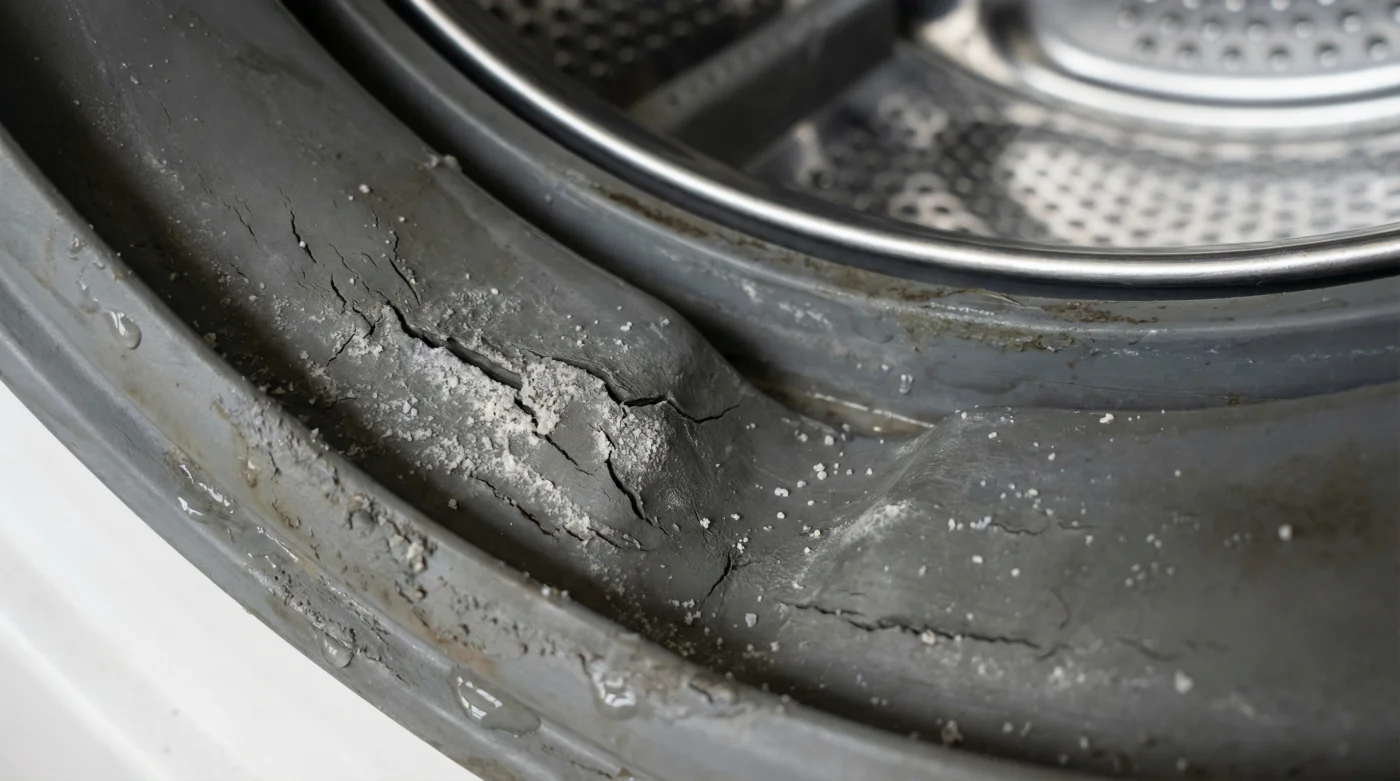
The satisfying hollow thud of the washing machine door closing is a familiar comfort. You scoop a generous mound of pristine white baking soda into the drum, trusting the age-old promise of brighter whites and neutralized odors. It feels wholesome. It feels like the right thing to do. Yet, weeks later, a tiny puddle catches the toe of your sock on the laundry room floor. You wipe it up, casually blaming a loose hose. Then comes the damp, earthy smell of failing rubber. You thought you were giving your laundry a natural, harmless boost. Instead, you have been slowly grinding down the very seal that keeps the water where it belongs.
The Sandpaper In Your Drum
We treat baking soda as a universal cure-all. It scrubs burnt pans, lifts stubborn carpet stains, and freshens stale refrigerators. But the very trait that makes it so remarkably effective at scouring away tough grime is exactly what betrays your modern front-loading washer. Baking soda is a crystalline abrasive.
When you add this dry powder directly to a standard wash cycle, particularly the cold-water settings we rely on to save energy and protect fabric colors, it refuses to dissolve entirely. Instead, it mixes with water and lint to form a gritty, dense paste. Gravity pulls this mixture down to the lowest point of the machine, where it settles snugly into the deep, flexible folds of the rubber door gasket.
Think of the gasket as a soft, protective cushion. Now imagine rubbing micro-pumice stone into that cushion while it violently vibrates at a thousand revolutions per minute during the spin cycle. The friction is relentless. Over extended regular use, the powder scores the smooth surface of the rubber. Micro-tears form along the stress points. The rubber dries out, loses its essential elasticity, and eventually splits, leaving your home vulnerable to sudden, damaging leaks.
I learned this reality standing next to Marcus, a local appliance repair technician with thirty years of grease settled deep into his knuckles. He pulled back the gray lip of my leaking front-loader, revealing a chalky, pitted trench hidden in the rubber fold. ‘Everyone wants to be an amateur chemist in the laundry room,’ Marcus muttered, scraping away a hardened crust of undissolved powder with his thumb. ‘You think you are softening the water, but you are just throwing fine gravel at a spinning balloon. The rubber never stood a chance.’
| Laundry Routine Profile | The Hidden Friction | The Mechanical Benefit of Stopping |
|---|---|---|
| Cold-Water Eco Washers | Powder fails to dissolve below 65 Degrees Fahrenheit, leaving sharp crystals behind. | Maintains the smooth integrity of the rubber, preventing structural micro-tears. |
| Heavy Soil / Pet Owners | Baking soda traps hair and dirt against the gasket, creating an abrasive paste. | Eliminates the gritty buildup, allowing the door to form a perfect watertight seal. |
| Natural Cleaner Advocates | Continuous daily use accelerates the drying and cracking of synthetic rubber parts. | Extends the life of the machine by years, preventing a $300+ gasket replacement. |
Mindful Mechanics: Better Ways to Boost Your Wash
You do not have to abandon your pursuit of fresh, odor-free clothes. You simply need to change the physical delivery method. If you rely on baking soda to handle tough workout gear or pet blankets, the trick is to eliminate the grit before it ever touches the delicate internals of your machine.
Start by dissolving your baking soda in a cup of hot water before adding it to the wash. This simple extra step transforms the abrasive powder into a gentle, highly effective alkaline solution. It carries all the necessary odor-neutralizing power into the drum with absolutely none of the destructive friction.
| Material / Element | Physical Characteristic | Impact on Washing Machine |
|---|---|---|
| Sodium Bicarbonate (Baking Soda) | Mildly abrasive, crystalline structure. | Acts as micro-sandpaper during high-speed spin cycles. |
| Cold Tap Water | Low kinetic energy, poor solvent for dense powders. | Leaves heavy powder residue trapped in the lower drum. |
| Synthetic Rubber Gasket | Flexible, porous, vulnerable to prolonged friction. | Erodes and cracks, leading to internal mold and external water leaks. |
- Air fryer basket non-stick coatings peel away using aerosol cooking sprays.
- Lithium-ion drill battery lifespans plummet when stored inside hot garages.
- Car insurance policy holders lose accident claims ignoring this specific clause.
- Baking soda destroys washing machine seals over extended regular use.
- Tire pressure sensor lights trigger false alerts during sudden temperature drops.
Finally, make it a habit to physically tend to your gasket. Keep a soft, damp microfiber cloth on a hook next to the washer. After your last load of the week, gently run the cloth through the interior rubber folds. Removing lint, pet hair, and residual detergent ensures the rubber stays supple and functions exactly as engineered.
| What to Look For (Gasket Inspection) | What to Avoid (Laundry Habits) |
|---|---|
| White, chalky residue pooled at the bottom of the rubber ring. | Dumping dry powders directly onto dry clothes before starting a cycle. |
| A rough, pitted texture when you run your finger along the inner fold. | Relying strictly on cold water when washing heavily soiled items with additives. |
| Small hairline cracks appearing near the drainage holes. | Closing the washer door immediately after a load, trapping moisture and grit. |
The Peace of a Quiet Routine
There is a profound comfort in knowing your home is running smoothly. When you stop inadvertently fighting the mechanics of your appliances, laundry day stops being a countdown to a stressful repair bill. It becomes a quiet, reliable rhythm in the background of your busy week.
Your washing machine works incredibly hard to carry the dirt and weight of your daily life. By keeping abrasive powders out of its delicate joints, you are returning the favor. You are honoring the tools that keep your household moving forward, load after load, year after year.
‘Take care of the rubber, and the machine will take care of your clothes; ignore the rubber, and you will be mopping your floor by Tuesday.’ – Marcus, Master Appliance Technician
Frequently Asked Questions
Can I still use white vinegar instead of baking soda?
Yes, but with caution. While liquid vinegar will not abrade the seal physically, its high acidity can dry out and degrade rubber over time. Use it sparingly, and always dilute it by placing it in the fabric softener dispenser rather than directly on the gasket.What if I have already been using baking soda every day?
Take a warm, damp cloth and thoroughly wipe out the folds of your gasket immediately. Run an empty hot water cycle without any additives to flush out remaining crystals, and inspect the rubber for any deep cracks or brittleness.Does this abrasion issue apply to top-loading machines?
It is far less common. Top loaders hold clothes in a vertical tub of water, which naturally dissolves powders more efficiently and does not rely on a watertight front-facing rubber door seal to prevent floods.How much does it typically cost to replace a ruined door gasket?
Depending on the brand and model of your front-loader, parts and labor for a professional gasket replacement typically range from $200 to $400.What is the best daily alternative to baking soda for odors?
Look for a high-quality liquid enzymatic detergent. Enzymes naturally break down the biological bacteria causing the odors without introducing any rough, physical friction to your machine’s components.