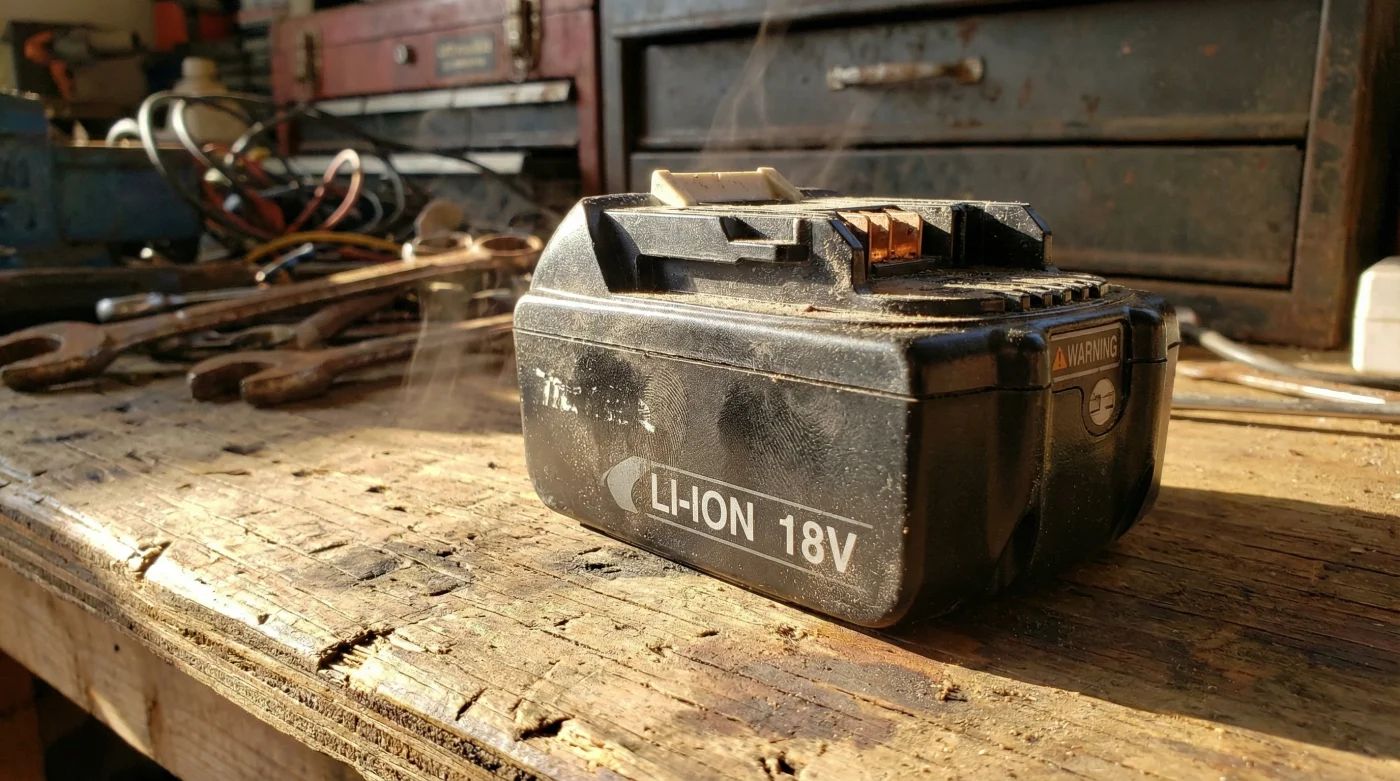
It is a blistering Saturday afternoon in mid-July. You grab your impact driver off the pegboard in your sweltering garage, the plastic grip warm and slightly tacky against your palm. You snap the heavy, black 20-volt block into the base, anticipating that familiar, sharp click. You squeeze the trigger to sink a three-inch deck screw into a stubborn piece of pine. Halfway down, the motor groans, stutters, and surrenders. You stare at the tool in disbelief. You just pulled that pack off the charger three days ago. The frustration sits heavy in your chest as you trudge back to the workbench, only to find the charger blinking an angry red warning.
The Fever Inside the Cell
This failure is not a manufacturing defect. It is the direct result of an urgent consumer habit that contradicts our deepest organizational instincts: storing your tools exactly where you use them. We build beautiful workbenches in our garages and sheds, lining up our chargers like soldiers at attention. But behind those closed garage doors, the summer sun transforms the space into a suffocating oven.
Think of a lithium-ion battery not as a hard, static container of electricity, but as a sealed jar of highly reactive chemical soup. It prefers the exact same climate you do. When the ambient temperature climbs above 85 degrees Fahrenheit, the chemical structure inside the battery begins to violently degrade. This is not a temporary dip in performance. Storing these power sources in a hot garage permanently destroys their maximum charge capacity.
| Who Needs This Adjustment | The Immediate Benefit |
|---|---|
| The Weekend DIYer | Never having to pause a Saturday project to wait for a charge. |
| The Independent Contractor | Saving hundreds of dollars annually by not replacing dead packs. |
| The Yard Warrior | Instant, reliable power for blowers and trimmers on 90-degree days. |
I learned this the hard way from an electrician named Marcus, who works out of a metal-paneled work van in Austin, Texas. We were sitting on a tailgate drinking ice water when he tossed a completely dead, swollen battery into a recycling bin. He told me that heat does not just drain the power; it scars the internal components. He compared leaving a battery in a hot van to leaving a carton of milk on the driveway. The chemistry sours. Once that capacity is burned away by 95-degree afternoon spikes, it never comes back.
Evacuating the Heat Zone
Reversing this damage requires a physical shift in your workspace. You have to decouple the power source from the tool itself. The drill can safely stay on the garage pegboard. The battery, however, requires an indoor sanctuary.
Start by relocating your charging station today. Find a dedicated spot inside your home, perhaps a laundry room shelf or a closet in the hallway. By bringing the chargers into an air-conditioned space, you give the internal chemistry a stable environment to rest and recover.
When you finish a project, make it a deliberate habit to eject the power pack immediately. Carry it inside with you when you go in to wash your hands. Treat the battery with the same urgency as bringing in the perishable groceries.
| Storage Temperature (Fahrenheit) | Permanent Capacity Loss (After 1 Year) |
|---|---|
| 60 – 70 Degrees | Barely 4 percent. |
| 85 Degrees | Roughly 15 percent. |
| 100 Degrees | Up to 35 percent. |
| 120 Degrees (Common in closed garages) | A staggering 60 percent. |
If you have spent any time gripping a drill, you know the heavy fatigue of swapping out dead power packs every twenty minutes because they refuse to hold a charge. Bringing them indoors eliminates this friction entirely. You trade a few seconds of walking for years of reliable power.
| What To Look For (Healthy Habits) | What To Avoid (Danger Signs) |
|---|---|
| Storing packs at 40 to 50 percent charge for the winter. | Leaving packs fully depleted on the hot garage workbench. |
| Charging at room temperature before heading outside. | Charging a hot battery immediately after heavy use. |
| Firm, intact plastic casing with clean metal contacts. | Slightly bulging sides or a plastic shell that feels warped. |
Reclaiming Your Rhythm
It feels strange at first, walking away from the workbench with your batteries in hand, leaving the naked tools hanging on the wall. It breaks the visual completion of a tidy workspace. But this minor spatial adjustment guards the lifeblood of your expensive equipment.
- Air fryer basket non-stick coatings peel away using aerosol cooking sprays.
- Lithium-ion drill battery lifespans plummet when stored inside hot garages.
- Car insurance policy holders lose accident claims ignoring this specific clause.
- Baking soda destroys washing machine seals over extended regular use.
- Tire pressure sensor lights trigger false alerts during sudden temperature drops.
A tool is only as reliable as the respect you show its power source; keep the battery comfortable, and it will carry the hardest labor.
FAQ
Can I store my batteries in the refrigerator to keep them cold?
No. The extreme cold and potential for condensation can cause internal short circuits. A dry, climate-controlled room is always best.
Is it okay to leave the battery on the charger indoors all the time?
Most modern chargers have smart chips that stop the flow of electricity once full, but it is best practice to remove them once the green light holds steady to prevent micro-cycling.
How long does it take for heat to permanently damage the cells?
Even a few days sitting in 100-degree heat will begin to degrade the maximum capacity, but a full summer in a hot garage guarantees significant, irreversible loss.
Do I need to let a battery cool down before charging it?
Absolutely. If the pack is hot to the touch from heavy work or direct sun exposure, let it sit in an air-conditioned room for an hour before putting it on the dock.
Will a hot battery explode in my garage?
While catastrophic thermal runaway is rare, extreme heat combined with physical damage severely increases the risk of a dangerous fire. Swollen batteries must be safely recycled immediately.