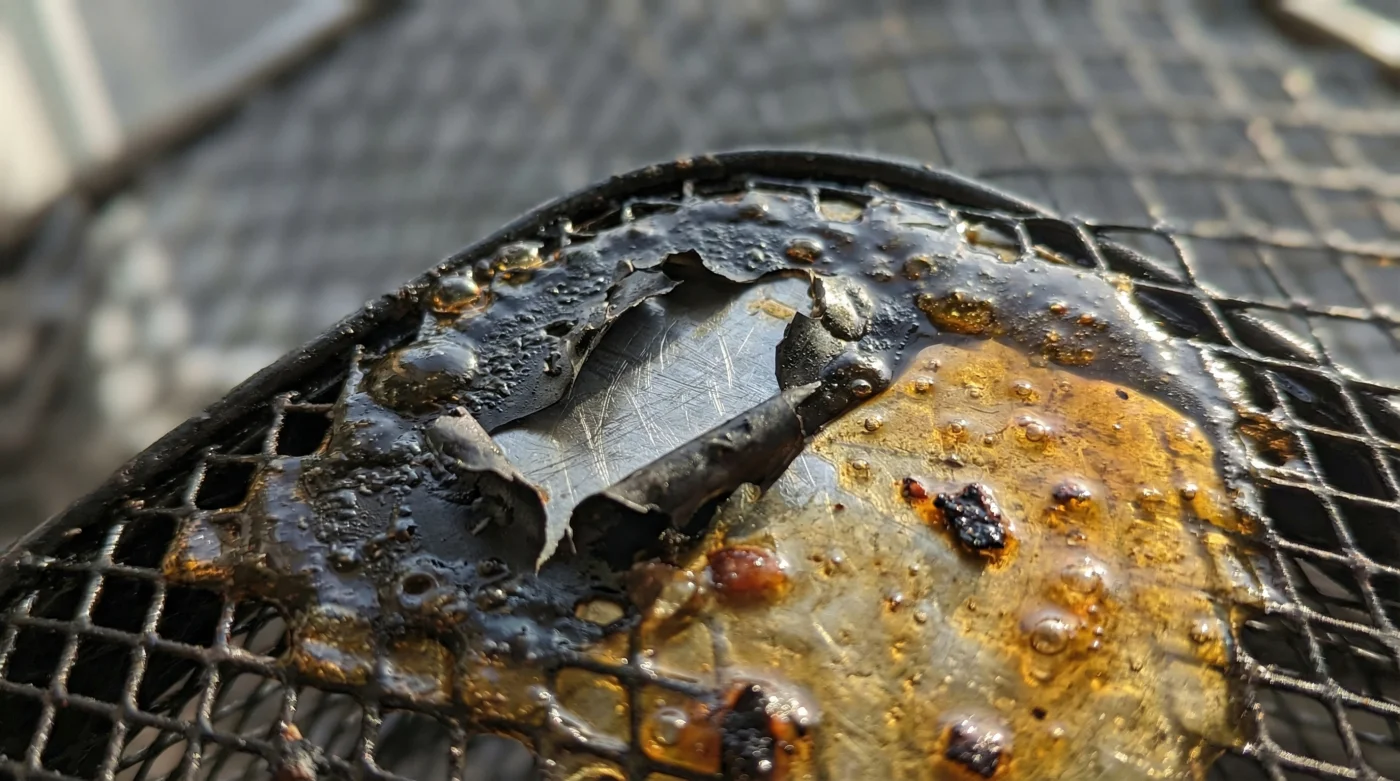
It happens on a hurried Tuesday evening. The familiar, rhythmic ticking of your countertop appliance winds down with a sharp chime. You pull the drawer open, expecting the satisfying, dry rustle of perfectly crisped sweet potato fries. Instead, you hear a muted, wet tear as the food clings stubbornly to the dark metal grate. Frustrated, you reach into the pantry for that ubiquitous can of aerosol cooking spray, intending to coat the basket heavily for the next batch. It feels like the logical fix. The can promises a flawless, frictionless surface. Yet, in that brief, hissing cloud of oil, you are quietly destroying the very tool you rely on to make daily dinners manageable.
The Illusion of the Protective Mist
We are taught from a young age that oil creates a barrier. You spray the baking sheet, the cookies slide right off. It is a simple, comforting equation. But applying that same logic to the intense environment of an air fryer creates a violent chemical contradiction. You assume you are painting a protective shield over the grate, but you are actually coating it in a slow-acting, microscopic adhesive. The relationship between your appliance and aerosol spray is less like a shield and more like a Trojan horse.
I learned this harsh truth from David, an appliance repair specialist who spends his days diagnosing the premature deaths of modern kitchen gadgets. Standing in his workshop, which smelled faintly of ozone and burnt breadcrumbs, he handed me a ruined basket. The bottom looked like peeling sunburn, shedding dark, unappetizing flakes of synthetic material. “Everyone blames the manufacturer when the metal starts showing,” David explained, picking at a loose curl of coating with a calloused thumb. “But it is almost always the spray. They treat aerosol like liquid butter, completely ignoring the propellant and emulsifiers hiding inside the can.”
The culprit is not the canola or olive oil itself. It is an additive called soy lecithin. Manufacturers use this emulsifier to keep the oil from separating inside the pressurized can. Under normal baking conditions, it goes unnoticed. However, an air fryer is not a normal environment. It is a concentrated vortex of high-velocity heat. When subjected to this extreme, cyclonic environment, soy lecithin does something completely unexpected: it polymerizes. It bakes directly into the Teflon or ceramic finish, bonding at a molecular level. As the appliance cools down on your counter, this invisible layer contracts, gripping the non-stick surface so tightly that it physically rips the finish away.
| Home Cook Profile | Common Frustration | The Specific Benefit of Quitting Aerosols |
|---|---|---|
| The Meal Prepper | Food constantly sticking to the basket during bulk weekend cooking. | Maintains a slick factory surface for years, making weekly cleanup a simple wipe-down. |
| The Family Chef | Worrying about chemical flakes ending up in children’s meals. | Eliminates the risk of ingesting degraded Teflon or synthetic emulsifiers. |
| The Quick-Dinner Fan | Having to buy replacement baskets every eight months. | Saves money and daily frustration by extending the lifespan of a single appliance. |
Breaking the Habit
Understanding the chemistry is only half the battle. Now, you have to change your physical rhythm in the kitchen. Moving away from the convenient hiss of a pressurized can requires a slight shift in your prep work, but the payoff is an appliance that serves you faithfully without leaving toxic confetti on your dinner plate.
Your first step is to treat the food, not the metal. When preparing vegetables or proteins, place them in a wide mixing bowl. Drizzle a measured spoonful of pure oil directly over your ingredients. Toss them gently with your hands or a wooden spoon until they carry a light, natural sheen. This guarantees an even crisp without ever exposing your non-stick grate to unnecessary compounds.
| Application Method | Chemical Reaction Under Convection Heat | Impact on Non-Stick Surfaces |
|---|---|---|
| Aerosol Cooking Spray | Soy lecithin polymerizes and fuses directly with the surface. | Bonds with Teflon; severe peeling and chipping occur upon cooling. |
| Pump-Action Spritzer | Pure oil heats cleanly without any chemical binding. | Harmless. Preserves the delicate factory finish indefinitely. |
| Silicone Basting Brush | Distributes pure fat evenly without excess pooling. | Gentle application prevents hot spots and protects the coating over time. |
- Windshield wipers streak glass constantly without this simple rubbing alcohol technique.
- Cast iron skillets crack instantly washing them with cold tap water.
- Wi-Fi routers throttle internet speeds placed near these common household appliances.
- Google Chrome deletes standard ad blockers starting next Tuesday morning.
- Toyota hybrid models face indefinite production delays following sudden supplier bankruptcies.
Another excellent alternative is a simple silicone basting brush. A quick dab of pure oil painted lightly across the grate provides all the release you need without introducing a single emulsifier into the cooking chamber. It is a quiet, satisfying motion that ensures you are treating your equipment with care.
| The Quality Checklist | What to Look For | What to Avoid |
|---|---|---|
| Oil Selection | 100% pure, single-ingredient oils like Avocado, Grapeseed, or Olive. | Ingredient lists containing ‘propellants’, ‘soy lecithin’, or ’emulsifiers’. |
| Sprayer Tool | Manual glass misters that rely on a physical hand-pump mechanism. | Pressurized aluminum aerosol cans from the supermarket baking aisle. |
| Cleaning Gear | Soft microfiber cloths and gentle, degreasing dish soap. | Stiff-bristled brushes used to forcefully scrub away polymerized residue. |
A Return to Mindful Prep
There is a quiet satisfaction in taking care of the things that take care of you. We rely heavily on these countertop convection ovens to feed ourselves when time is scarce and energy is low. By eliminating that one toxic variable from your routine, you are doing more than just saving a piece of metal from peeling into your food.
You are bringing a sense of intention back to your counter. Tossing potatoes in a bowl with a dash of olive oil and a pinch of salt reconnects you to the tactile reality of making a meal. You stop treating cooking as a rushed, synthetic process and start treating it as a brief, grounding ritual. In the end, the food tastes better, the cleanup is an effortless wipe of a sponge, and your peace of mind remains completely intact.
“The true longevity of any tool lies not in how it was manufactured, but in the gentle, deliberate ways we choose to maintain it every single day.”
Frequently Asked Questions
Can I use parchment paper instead of oil to prevent sticking?
Yes, perforated parchment liners designed specifically for these baskets prevent sticking while allowing proper air circulation for a crispy finish.Is it safe to eat food if the coating has already started peeling?
It is highly advised to stop using a peeling basket immediately, as you risk ingesting synthetic flakes which have degraded under extreme heat.Why do manufacturers still suggest lightly oiling the grate?
They recommend pure oil to assist with browning and texture, but explicitly warn against aerosol propellants and emulsifiers in the fine print of the manual.Does this rule apply to ceramic-coated baskets as well?
Yes, soy lecithin will polymerize into and ruin the slick finish of ceramic just as viciously as it destroys traditional Teflon.How can I remove the gummy residue if I have already used aerosols?
Make a thick paste of baking soda and water, let it sit on the grate for twenty minutes, and gently wipe it away with a soft, non-abrasive sponge.