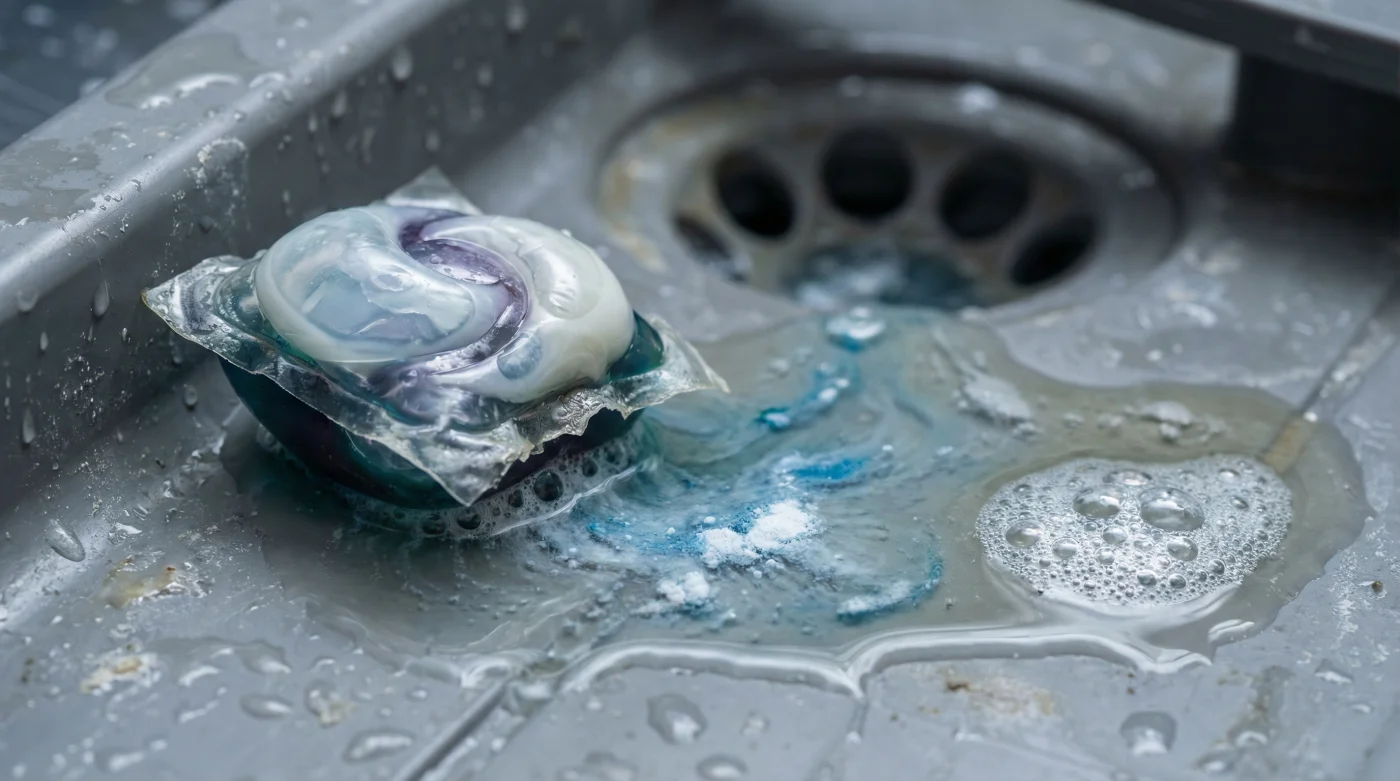
You know the feeling. The heavy kitchen door clicks open after a two-hour cycle, and you lean in, expecting the clean, hot breath of steam and the sharp, bright scent of lemon. Instead, you are met with the damp, sour smell of recycled water. The morning oatmeal is still cemented to the side of the bowl. The wine glasses from last night look like they have cataracts. Frustrated, you scrape the dishes, grab another little square detergent tablet, toss it carelessly onto the stainless steel floor of the basin, and hit the start button again. You figure it will dissolve anyway, right? But by trying to save three seconds, you just cost yourself another two hours of waiting and a lot of wasted hot water.
The Choreography of the Machine
We often treat the little plastic dispenser door on the inside panel like an optional suggestion. Maybe the latch feels flimsy, or maybe you are just exhausted at the end of the day and want to get to bed. You assume the tablet is going to end up swirling around the bottom of the tub eventually, so why not just throw it in there right now? But throwing the pod loosely into the tub is a sequence played entirely out of order. It disrupts the mechanical rhythm of the appliance.
Think of the wash cycle like the timing of rainfall on dry soil. The central metaphor here is that your dishwasher does not just fill up like a bathtub and splash around once. It operates in distinct, carefully choreographed phases. When you bypass the dispenser, you are forcing the detergent to perform its job at the exact wrong moment, wasting its chemical potential on the least important part of the chore.
To understand why this habit fails so completely, I spoke with an appliance repair technician named Arnie, a man who has spent the last thirty years diagnosing burned-out motors, clearing clogged drain hoses, and listening to the hum of kitchen machinery. While examining a machine that consistently left a chalky residue on the glassware, he pointed his flashlight down at the floor of the tub. He explained that people constantly underestimate the intelligence of the machine’s programming. The very first thing your dishwasher does when you press start is run a rapid pre-wash cycle.
It pulls in about two gallons of water, heats it to around 120 degrees Fahrenheit, and sprays the dishes aggressively for ten to fifteen minutes. The sole purpose of this pre-wash is to knock off the loose food particles, the fresh sauces, and the coffee dregs. Then, you hear that low, gurgling sound. That is the drain pump kicking on. The machine completely empties that dirty water out through the sink plumbing.
| Target Audience | Specific Benefits of Using the Dispenser |
|---|---|
| Busy Parents | Eliminates the need to re-wash baby bottles and sticky plastic plates. |
| Home Chefs | Protects expensive cookware from abrasive, dry-water friction. |
| Eco-Conscious Consumers | Saves gallons of water and electricity by avoiding repeated wash cycles. |
Here is where the failure happens. If you toss the tablet directly into the main basin, the hot water of that initial pre-wash immediately dissolves the thin, water-soluble outer membrane of the pod. The concentrated detergent releases, mixes with the first wave of dirty, food-filled water, and goes straight down the drain pipe fifteen minutes into the routine. By the time the machine fills back up for the main wash—the intensive phase that actually scrubs your dishes and lasts for an hour—you are washing your plates with plain, hot water. There are no enzymes left. There is no grease-cutting soap.
The dispenser door exists specifically to protect the detergent from that initial purge. It acts as a time capsule, remaining tightly shut during the pre-wash and only popping open when the clean water for the main wash begins to circulate.
| Phase of Cycle | Water Temperature | Mechanical Logic & Action |
|---|---|---|
| Pre-Wash | 110°F – 120°F | Loosens debris; detergent is explicitly NOT needed here. |
| Drain Purge | N/A | Flushes dirty water out; loose pods are lost here entirely. |
| Main Wash | 130°F – 140°F | Dispenser door opens; enzymes break down tough proteins. |
The Mechanics of the Loading Routine
- Parchment paper releases toxic compounds exposed to standard broiler temperatures.
- WD-40 degrades rubber car door seals causing severe winter drafts.
- Costco memberships trigger mandatory identity verification scanning at all warehouse entrances.
- Ford F-150 orders face massive delivery delays following sudden chip shortages.
- Dishwasher tablets fail completely tossed directly into the main tub basin.
Next, press the tablet firmly into the chamber and ensure the latch clicks shut securely. If the door feels gummed up with old, crusty soap residue, take a moment to wipe it down with a damp cloth and dry it thoroughly. A sticky latch is a common, silent reason the door fails to open at all, ruining the load just as thoroughly as a tossed pod.
Finally, inspect the lower rack right before you close the main door. You must ensure you have not placed a tall baking sheet, a massive platter, or a protruding skillet handle directly in front of the dispenser door. If the door cannot swing open freely, the soap stays trapped, and the machine essentially breathes through a pillow, choking on its own lack of resources as you wake up to dirty dishes.
| What to Look For (Quality Check) | What to Avoid (Bad Habits) |
|---|---|
| A dry, cleanly-wiped detergent dispenser chamber. | Handling pods with wet or greasy hands. |
| A distinct ‘click’ when closing the dispenser flap. | Forcing oversized pots in front of the internal door panel. |
| Clear, squeaky-clean glassware after a full cycle. | Relying on the ‘quick wash’ setting for heavily soiled plates. |
Reclaiming Your Time
Efficiency in the kitchen is not about rushing through a task so quickly that you compromise the result; it is about ensuring you only have to do the chore once. When you take the extra three seconds to dry your hands and snap the tablet into its designated chamber, you align yourself with the engineering of the machine. You stop fighting the process and start working alongside it.
The simple, deliberate act of closing that little plastic door guarantees your expensive detergent survives the pre-wash purge. It means waking up to a kitchen that feels completely reset. You get glassware that catches the morning light beautifully, ceramic plates that feel smooth to the touch, and the quiet satisfaction of a daily routine that works precisely as intended. You regain the time and energy you used to spend soaking, re-washing, and questioning why your soap was failing you.
The dispenser door is the guardian of your detergent; bypass it, and you wash your dishes with nothing but good intentions and hot water.
Frequently Asked Questions
Can I use the loose pod method if I skip the pre-wash?
Most modern dishwashers do not allow you to skip the initial drain and spray sequence, even on normal cycles, meaning the pod will still be lost early on.Why does my dispenser door sometimes stay closed?
Usually, this is caused by a tall item on the bottom rack physically blocking the door from springing open, or by sticky moisture cementing the latch.Are liquid detergents better than tablets?
Tablets generally contain a more concentrated mix of enzymes and rinse aids, but liquids are fine as long as they are also placed securely in the closed dispenser.Do I still need to scrape my plates?
Yes. While you do not need to pre-wash them in the sink, scraping off large, solid chunks of food prevents your machine’s internal filter from clogging.What if my dispenser latch is permanently broken?
If the door will not stay shut, you should replace the dispenser assembly. As a temporary fix, use a powder detergent and run a cycle without a pre-wash if your machine allows manual overrides.