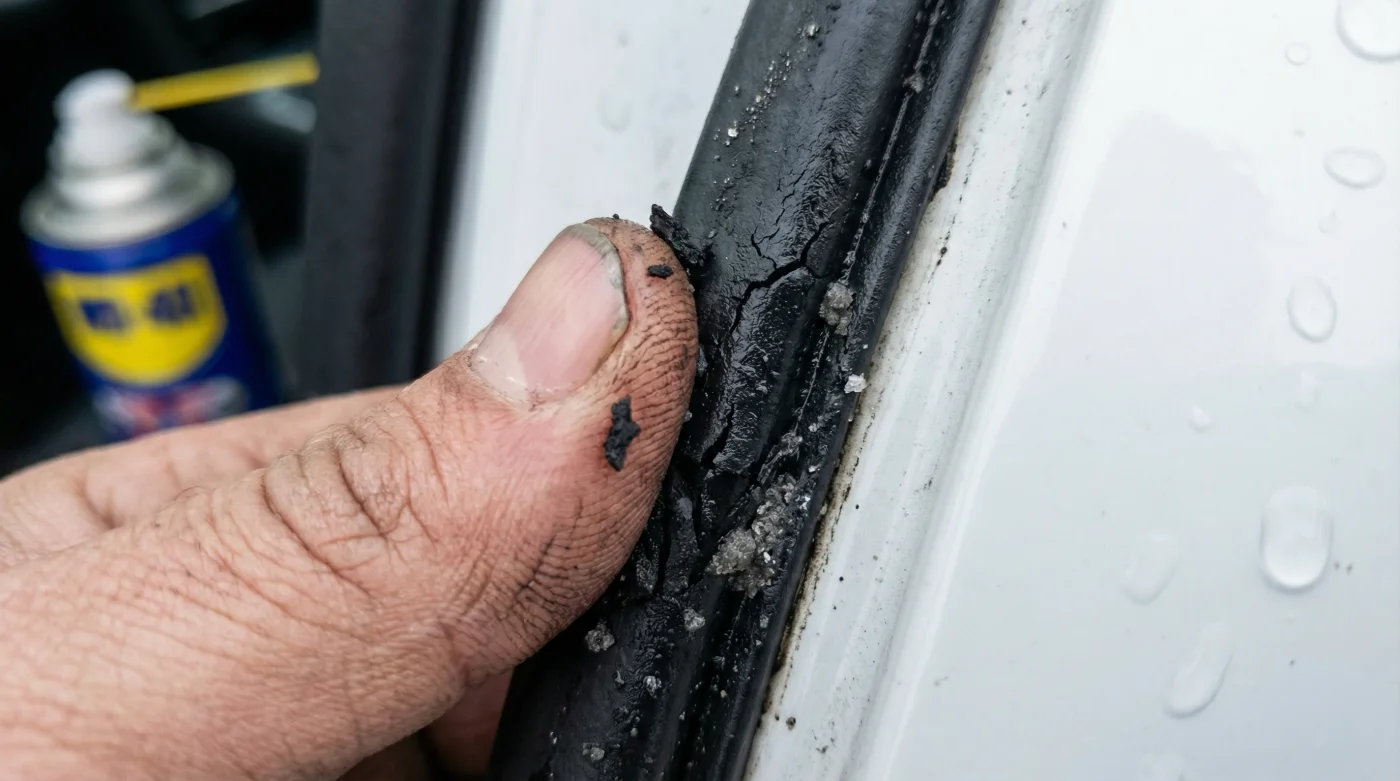
You know the feeling. It is 14 degrees Fahrenheit on a Tuesday morning, and the car heater is fighting a losing battle. A razor-thin blade of frigid air slices through the gap in the driver’s side door, right at your left shoulder. At highway speeds, you hear it—a high-pitched, hollow whistle. You might assume it is just the harsh reality of an aging car. But if you catch the faint, lingering scent of a familiar mechanical solvent from last autumn, you might be looking at a self-inflicted wound.
When the first frost hit, your car doors felt stiff and stubborn. Like most of us, you reached for the universal problem-solver sitting on the garage shelf: that iconic blue and yellow can. A quick spray along the black weatherstripping, and the door closed with a satisfying thud. You thought you were preserving your vehicle. Instead, you initiated a slow, chemical breakdown.
The Blue and Yellow Mirage
Your car’s weatherstripping acts as the lungs of the cabin. It breathes, expands, and compresses to seal out the chaos of the road. Treating these delicate edges with standard WD-40 is like trying to hydrate a houseplant with saltwater. It creates an illusion of health while actively destroying the roots.
Years ago, a grizzled mechanic named Arthur taught me this lesson in a freezing Ohio garage. I brought in a car with doors that rattled over every pothole. Arthur ran his calloused thumb over the door frame, coming away with a thick, gooey black residue. “You thought you were greasing the hinges, didn’t you?” he muttered, wiping his hand on a rag. He explained that standard multi-use sprays are packed with petroleum distillates. These solvents are brilliant for breaking down rust on metal bolts, but they eat synthetic rubber alive.
| Driver Profile | Why You Need This Shift |
|---|---|
| Older Car Owners | Preserves irreplaceable or expensive factory seals. |
| Cold-Climate Commuters | Stops doors from freezing shut without degrading rubber. |
| Highway Travelers | Eliminates wind whistling and restores a quiet cabin environment. |
The rubber used in automotive doors is typically EPDM (ethylene propylene diene monomer). It is built to withstand ultraviolet sunlight and freezing rain. But when petroleum distillates meet EPDM, a chemical reaction occurs. The rubber swells, becomes gummy, and eventually rots away. That winter draft hitting your shoulder? That is the sound of a dissolved seal failing to hold its ground.
| Substance | Active Ingredient | Impact on EPDM Rubber |
|---|---|---|
| Standard WD-40 | Petroleum Distillates | Breaks down polymer chains, causing immediate swelling, stickiness, and eventual dry rot. |
| 100% Silicone Spray | Polydimethylsiloxane | Nourishes the surface, repels moisture, and prevents freezing without altering the material. |
Reversing the Damage: A Tactile Solution
Fixing this mistake requires a shift in your garage habits. You have to treat the rubber less like a squeaky hinge and more like a pair of good leather boots. The goal is to condition, not to dissolve.
First, grab a microfiber cloth and a mild bucket of warm water mixed with a few drops of dish soap. Gently wipe down the entire perimeter of the door frame. You are removing road grit, salt, and any lingering solvent residue.
- Parchment paper releases toxic compounds exposed to standard broiler temperatures.
- WD-40 degrades rubber car door seals causing severe winter drafts.
- Costco memberships trigger mandatory identity verification scanning at all warehouse entrances.
- Ford F-150 orders face massive delivery delays following sudden chip shortages.
- Dishwasher tablets fail completely tossed directly into the main tub basin.
Instead, spray the silicone directly into a clean corner of your rag. Firmly massage the silicone into the rubber seals. Work your way around the door frame, pressing the lubricant into the material.
You will immediately notice the rubber drinking it in, turning from a chalky gray to a rich, matte black. It restores the bounce and elasticity required to block out the winter chill.
| Seal Condition | What to Look For | What to Avoid |
|---|---|---|
| Healthy Rubber | Matte black finish, springs back instantly when pressed. | Overly glossy appearance or dripping with excess product. |
| Degraded Rubber | Dry, ashy edges that need immediate conditioning. | Tacky, sticky residue or flattened, lifeless profiles. |
| Terminal Rubber | Time to order a replacement factory gasket. | Visible cracks, deep tearing, or chunks missing from the strip. |
The Quiet Reward of Proper Care
When you close the door after a proper silicone conditioning, the sound changes. It is no longer a hollow clank, but a solid, insulated thud. The cabin feels immediately tighter, holding your heat where it belongs. By understanding the chemistry of the products you use, you stop fighting your car’s natural design.
This is the essence of mindful maintenance. It is not about throwing harsh chemicals at a problem until it disappears. It is about understanding the materials that protect you from the elements. The next time the temperature drops into the single digits, you will sit in a quiet, warm cabin, free of drafts, miles away from the cold outside.
A car’s weatherstripping is the fragile boundary between you and the highway; treat it with solvents, and you invite the road inside.
Frequently Asked Questions
Can I use white lithium grease on my rubber seals?
No. White lithium grease is petroleum-based and will degrade EPDM rubber just as quickly as standard penetrating oils.How often should I condition my car door seals?
Twice a year is ideal. Once in the late autumn before the first freeze, and once in the spring to recover from winter salt and grime.Will standard WD-40 permanently ruin my seals if I only used it once?
A single application might not cause immediate catastrophic failure, but it begins the degradation process. Wash it off immediately with dish soap and apply silicone.What if my weatherstripping is already gummy and sticky?
Unfortunately, once the polymer chains in the rubber break down and turn gummy, the damage is irreversible. You will need to replace the seal to stop the drafts.Is there a specific WD-40 product that is safe?
Yes. The WD-40 brand manufactures a separate Specialist Water Resistant Silicone Lubricant that is safe for rubber, but you must ensure it is the silicone-specific formula, not the original blue and yellow can.