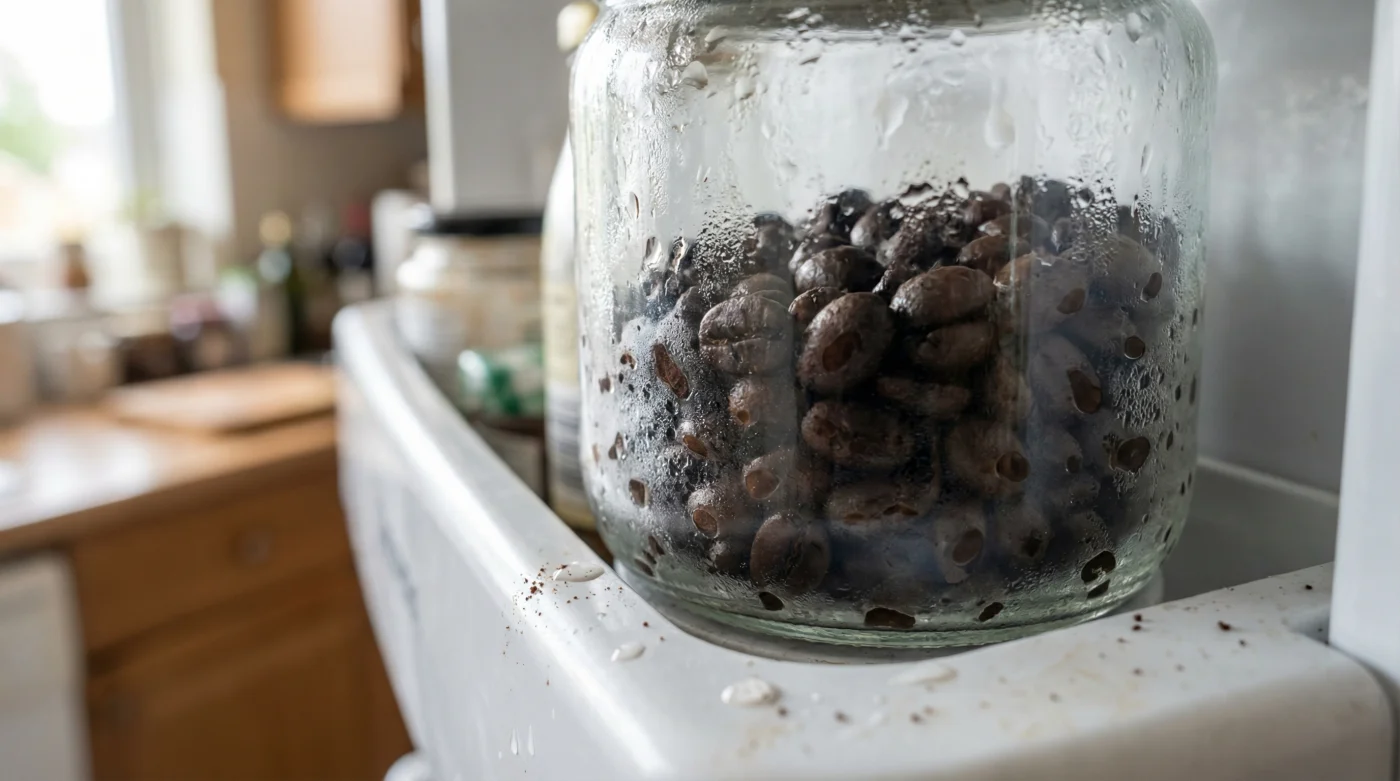
You shuffle into the kitchen before the sun even thinks about coming up. The floorboards creak under your socks. You reach for the refrigerator handle, pulling open the heavy door to grab that expensive bag of single-origin coffee beans you bought on Tuesday. You measure them out, fire up the grinder, and pour the hot water. But when you lean over the mug, expecting that rich, chocolatey bloom of morning comfort, you get nothing. The aroma is muted. The first sip tastes flat, almost like damp cardboard. You check the expiration date, but it is perfectly fine. The problem is not the date. The problem is the refrigerator door.
The Cold Storage Illusion
For generations, we have been told that cold preserves things. If you want milk to last, it goes in the fridge. If you want vegetables to stay crisp, into the crisper drawer they go. It feels completely logical to apply that same preservation tactic to your coffee beans. But coffee is fundamentally different from a head of lettuce or a carton of dairy. Think of a freshly roasted coffee bean not as a solid, impenetrable pebble, but as a dense, dry sponge. It is incredibly porous. When you subject that tiny sponge to the fluctuating temperatures of a refrigerator door, you force it to absorb whatever environment surrounds it.
Every time you swing that door open to grab the mustard or a stick of butter, warm kitchen air rushes over the cold beans. Condensation immediately forms on their chilled surface. This is the moisture trap. Your beans are essentially drinking the humid, leftover-scented air of your fridge. They soak up the microscopic water droplets, which instantly begin diluting the delicate oils that give your brew its specific character and aroma. A refrigerator door is the single worst place in your kitchen for something so structurally fragile.
A Lesson from the Cooling Tray
A few years ago, I spent a humid summer afternoon with Marcus, a master roaster at an independent shop in Austin, Texas. The air inside his production facility smelled deeply comforting, like toasted sugar, earth, and cherry wood. As he ran his calloused hands through a massive pile of cooling Guatemalan beans, listening for the subtle cracking sounds of the roast, I asked him about the biggest mistake his customers make at home. He did not even have to think about it.
He pointed a finger at me and said, ‘They take my hard work, they drive it home, and they throw it next to last night’s leftover lasagna.’ Marcus explained that roasting coffee is essentially a highly technical process of controlled drying and careful oil extraction. To put those perfectly dehydrated beans into a damp, cold, active box is to completely undo all that effort. ‘Storing beans in the fridge is like forcing them to breathe through a wet paper towel,’ he told me, shaking his head. ‘The cold strips away the vibrant, natural acids, and the moisture entirely kills the body of the coffee.’ He stressed that keeping coffee away from the cold is not just a suggestion; it is a foundational rule of the craft.
| Coffee Drinker Profile | Specific Storage Benefit |
|---|---|
| The Daily Brewer | Consistent extraction and predictable flavor every single morning without fighting condensation. |
| The Weekend Sipper | Preserves the delicate aromatic oils over weeks, keeping that special Sunday roast tasting fresh. |
| The Espresso Enthusiast | Maintains the precise moisture content required for a thick, rich crema on top of the shot. |
The Practical Application: Rescuing Your Beans
The solution requires pulling your coffee out of the cold and finding it a proper home. The enemies of fresh coffee are light, heat, moisture, and oxygen. Your refrigerator introduces two of those instantly. You must store your coffee in an opaque, airtight container at room temperature to completely protect it.
First, find a canister that completely blocks out the light. Clear glass jars look beautiful on a countertop, but ultraviolet light degrades the coffee oils almost as quickly as moisture does. Ceramic, stainless steel, or dark-tinted vacuum canisters are your best choices. You want a vessel that keeps the beans completely in the dark, preserving their structural foundation.
- Synthetic motor oil degrades prematurely skipping this specific highway driving cycle.
- Coffee beans lose flavor entirely stored inside standard refrigerator door shelves.
- Spotify Premium accounts lose included audiobook access under new subscription tiers.
- Costco rotisserie chicken packaging undergoes massive plastic reduction starting next month.
- Standard HDMI cables artificially throttle modern gaming console visual framerates drastically.
Finally, find a stable room-temperature location. Do not place the canister right next to your stove, where ambient heat fluctuates wildly while you cook. Choose a dedicated, cool, dry cabinet or pantry shelf. It becomes a quiet sanctuary for your morning routine.
| Environmental Factor | Refrigerator Impact | Room Temperature Action |
|---|---|---|
| Humidity | High. Condensation forms upon opening the door. | Low. Stable environment prevents water damage. |
| Odor Contamination | High. Beans absorb smells from nearby food items. | Zero. Sealed canister blocks all kitchen odors. |
| Temperature | Fluctuating. Door shelves warm up constantly. | Stable. Pantries maintain a consistent indoor climate. |
The Bigger Picture: Reclaiming Your Morning Rhythm
Moving your coffee from the chilly confines of the fridge to a dedicated, opaque canister in the pantry might seem like a minor, fussy detail. But it is a practical shift that fundamentally alters how you start your day. We rely on that first cup of coffee for far more than a quick jolt of caffeine. It is a moment of necessary grounding. It is the quiet, reliable transition between the heavy fog of sleep and the loud demands of the waking world. When you treat the beans with respect, giving them an environment where their flavor can simply exist without constant environmental degradation, you ensure that this daily rhythm remains completely intact.
You stop gambling with the taste of your morning brew. You know exactly what to expect when the hot water hits the grounds. The rich, chocolatey bloom returns to your mug. The subtle notes of berry, nut, or spice finally shine through the way the roaster intended. By ditching the cold storage illusion, you are not just saving an expensive bag of beans from ruin. You are actively defending the quality and the peace of your morning routine.
| The Quality Checklist | What to Look For | What to Avoid |
|---|---|---|
| Container Material | Solid ceramic, opaque stainless steel, dark-tinted metal. | Clear glass, thin plastic, transparent acrylic. |
| The Seal Type | Thick silicone ring, manual vacuum pump, one-way CO2 valve. | Loose screw top without a gasket, simple fold clips. |
| Storage Location | Dry pantry shelf, cool cabinet away from large appliances. | Fridge door, freezer drawer, countertop next to the oven. |
“Treat your coffee beans like dry spices; keep them in the dark, seal them tight, and never let them freeze.”
Common Questions About Coffee Storage
Is it ever okay to freeze coffee beans? Yes, but only if you are freezing unopened, vacuum-sealed bags for long-term storage, not daily use. Once you take them out to thaw at room temperature, never put them back in the cold.
Will an opaque bag work as well as a canister? A commercial coffee bag with a one-way valve is decent for a week, but a rigid canister with a strong vacuum seal offers far superior protection against daily physical compression and oxygen exposure.
Does whole bean coffee last longer than pre-ground? Absolutely. Whole beans have significantly less surface area exposed to the air, making them much more resilient to staling than coffee that has already been pulverized.
What if my kitchen pantry gets hot during the summer? Find the lowest shelf in the coolest room of your house. Heat naturally rises, so keeping your airtight canister close to the floor in a dark space is an excellent secondary defense.
How long will beans actually stay fresh at room temperature? When stored properly in a sealed, dark container away from heat sources, roasted beans will maintain their peak flavor profile for three to four solid weeks.