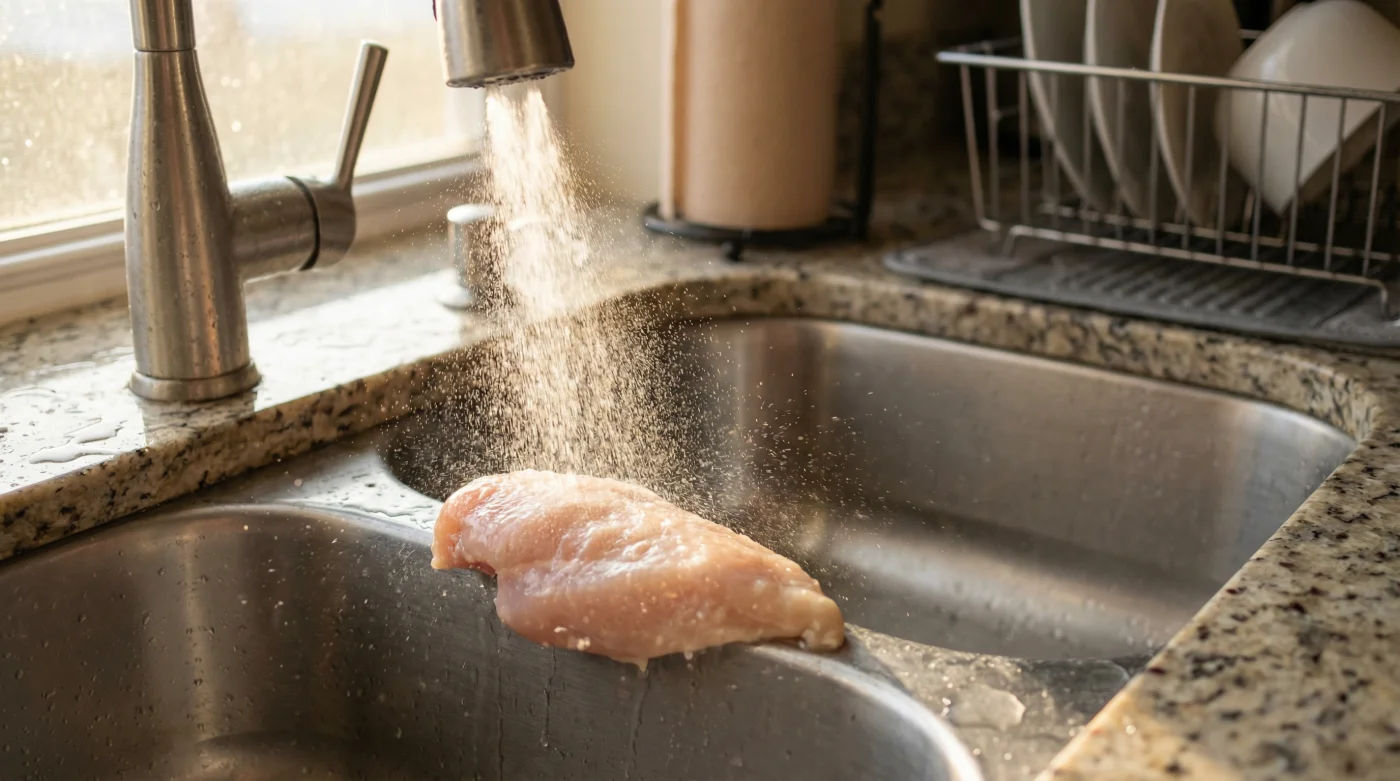
You stand at the edge of your kitchen sink, the cold water drumming a steady rhythm against the stainless steel basin. In your hands rests a pale, raw chicken breast, fresh from the grocer’s display. It is a ritual you learned by watching family members over the years. You hold the poultry under the stream, watching the water cascade over the meat, believing you are washing away the unseen dangers. You turn off the tap, reach for a towel, and feel a brief sense of accomplishment. The kitchen smells faintly of cold water and raw preparation, soon to be replaced by the rich aroma of roasting garlic and butter.
But right now, resting on your counter, your clean coffee mug, your wooden cutting board, and the fresh spinach leaves you left out for a salad are quietly receiving an invisible shower. By trying to clean the bird, you just turned your sink into a bacterial sprinkler system.
The Microscopic Rainstorm
The instinct to wash our food is deeply rooted in how we care for ourselves and our families. If an apple falls in the dirt, you rinse it. It feels completely logical to apply this same rule to raw poultry. But raw meat operates under a different set of physical rules. When the pressurized stream from a standard kitchen tap hits the slick, uneven surface of a raw chicken breast, it creates a microscopic rainstorm. The water does not penetrate the meat to clean it; instead, it bounces.
Instead of washing the bacteria down the drain, the splashing water aerosolizes it. Droplets of moisture, carrying invisible traces of salmonella and campylobacter, launch themselves off the meat and into the air. They drift. They settle. This splash radius easily extends up to three feet across your countertops, coating everything in a fine, invisible mist of contaminated water. The very act of trying to sanitize your dinner has inadvertently compromised the safety of your entire preparation area.
Think about the physical mechanics of water hitting an object. If you run a spoon under a fast faucet, the water sprays back at you, soaking your shirt. The uneven, fibrous membrane of a raw chicken thigh acts exactly like that spoon. The water strikes the meat, gathers momentum, and shoots off in random trajectories. Every tiny drop carries microscopic hitchhikers. You cannot see the salmonella coating the handle of your favorite paring knife, but it is there, thriving in the damp environment you just provided.
| Kitchen Persona | The Ingrained Habit | The Benefit of Stopping |
|---|---|---|
| The Weekend Meal Prepper | Rinsing bulk chicken breasts before freezing. | Eliminates the need to bleach an entire kitchen zone. |
| The Family Dinner Cook | Washing a whole roaster bird in the main sink. | Keeps nearby baby bottles and fruit bowls safe from drift. |
| The Fitness Enthusiast | Quick-rinsing daily protein portions. | Saves prep time and avoids cross-contaminating shaker cups. |
Years ago, I spent an afternoon observing the line at a busy, high-end bistro in Chicago. The kitchen was tight, hot, and moved with a frantic, beautiful rhythm. I watched Marcus, a sous chef with forearms scarred by years of oven burns, physically intercept a new prep cook who was carrying a tray of raw chicken toward the wash basin. The young cook looked confused, holding the meat over the sink as if offering a sacrifice to the plumbing.
Marcus did not yell. He simply placed a heavy hand on the cook’s shoulder and guided him to a stainless steel prep table. ‘Water does not kill anything here,’ Marcus told him quietly. ‘It only gives the bacteria a vehicle. When you wash the bird, you are just buying it a bus ticket to the salad station.’ Marcus knew that professional kitchens rely on heat, not water, to make poultry safe. The fire of the skillet is the great equalizer; the water from the tap is merely a chaotic distributor.
| Tap Water Pressure | Impact on Raw Poultry | Aerosolized Splash Radius |
|---|---|---|
| Low (Gentle Stream) | Water pools and gently spills over edges. | Up to 12 inches (Covers the sink perimeter). |
| Medium (Standard Washing) | Water bounces off the slick membrane. | Up to 24 inches (Reaches nearby dish racks). |
| High (Sprayer Attachment) | Forceful impact creates immediate misting. | Over 36 inches (Covers counters, utensils, and you). |
The Dry Pat Method: A New Prep Rhythm
Breaking a generational habit takes a conscious, physical redirection of your routine. You do not need to wash the chicken, but you do need to remove that residual surface moisture to get a proper, crispy sear in the pan. Dropping a wet piece of poultry into hot oil will only cause violent splattering and steaming, resulting in gray, unappetizing meat. The solution is simple, quiet, and contained. It begins before you even fully remove the poultry from its packaging.
Leave the raw chicken inside its original plastic tray. Take two heavy-duty paper towels and fold them into a thick square. Gently press the paper towel directly onto the surface of the meat, allowing the paper to absorb the excess liquid. Do not rub or scrub; just let the capillary action of the paper do the heavy lifting. You will feel the meat yield slightly under your hands, the slick surface giving way to a drier texture.
- Robot vacuums ruin hardwood floors dragging undetected microscopic sand particles.
- Ceramic brake pads destroy factory rotors skipping this specific bedding.
- Garlic cloves lose potent flavor completely dropped into hot oil.
- Severance agreements forfeit future unemployment benefits containing this standard paragraph.
- Liquid foundation accelerates visual aging layered over silicone facial primers.
Immediately discard the wet paper towels into the trash, followed by the plastic packaging. Wash your hands thoroughly with soap and warm water. By keeping the moisture contained to the packaging and the paper towel, your countertops remain entirely untouched by the raw juices. You have successfully prepped your meal without turning your kitchen into a hazard zone.
This method also drastically improves the final flavor of your dish. Moisture is the enemy of browning. The Maillard reaction—that beautiful chemical process that turns a pale chicken breast into a deeply golden, savory masterpiece—cannot happen if there is surface water present. If you skip the dry pat, the chicken will boil in its own excess liquid inside the pan. By keeping the meat dry from the moment you open the package, you guarantee a superior texture and a much safer cooking space.
| Poultry Prep Action | What to Look For (Do This) | What to Avoid (Stop This) |
|---|---|---|
| Moisture Removal | Using disposable paper towels that can be trashed instantly. | Using a cloth dish towel that lingers in the kitchen. |
| Workstation Setup | Prepping inside the original tray on an empty counter. | Moving wet chicken across the room to a crowded sink. |
| Sanitation | Washing hands immediately after tossing the package. | Touching spice jars or drawer handles with unwashed hands. |
| Cooking Preparation | Applying dry rubs to a completely patted-dry surface. | Dropping wet chicken into hot oil, causing violent splatter. |
The Quiet Confidence of a Safe Kitchen
There is a profound sense of relief that comes with knowing you are actually making your space safer, rather than accidentally spreading the very things you fear. Stepping away from the sink changes the entire mood of your dinner preparation. You no longer have to look at your dish rack and wonder if the clean plates caught the invisible mist of your cooking efforts. The frantic energy of rinsing and scrubbing is replaced by the calm, measured steps of the dry pat method.
Your kitchen should be a place of comfort, a space where you can chop vegetables and season meats without treating the room like a biohazard containment zone. By embracing this small shift in your physical routine, you reclaim your countertops. You simplify your cleanup. You allow the heat of the oven or the stove to do the hard work of purification, just as it was always meant to do.
The next time you bring a fresh package of chicken into your home, leave the faucet turned off. Trust the heat. Trust the dry pat. Your family, your sponge, and your peace of mind will be far better for it. You are no longer fighting the invisible rainstorm; you are mastering the quiet art of safe cooking.
“The stove is your only sanitizer when it comes to raw poultry; keep it out of the sink and let the fire do its job.”
Frequent Questions About Poultry Prep
Is there any type of meat I should wash before cooking?
No. Whether it is beef, pork, or poultry, washing raw meat only increases the risk of cross-contamination without providing any food safety benefits.What if the chicken has bone fragments or debris on it?
If you notice fragments from the butchering process, pick them off cleanly with a damp paper towel and immediately discard it, rather than rinsing the entire piece under water.Does soaking raw chicken in saltwater or vinegar kill bacteria?
While a brine might add flavor or tenderize the meat, acidic solutions like lemon juice or vinegar do not destroy foodborne pathogens. Only cooking to an internal temperature of 165 degrees Fahrenheit makes poultry safe.How should I clean the counter if a drop of raw juice falls?
Wipe up the spill immediately with a disposable paper towel, then clean the area with a disinfectant spray or a diluted bleach solution, leaving it to air dry completely.Why did older recipes always tell us to rinse the bird?
Historically, commercial butchering practices were less sanitary, and meat sometimes carried visible dirt or blood that cooks wanted to remove. Today’s commercial processing makes this step entirely unnecessary.