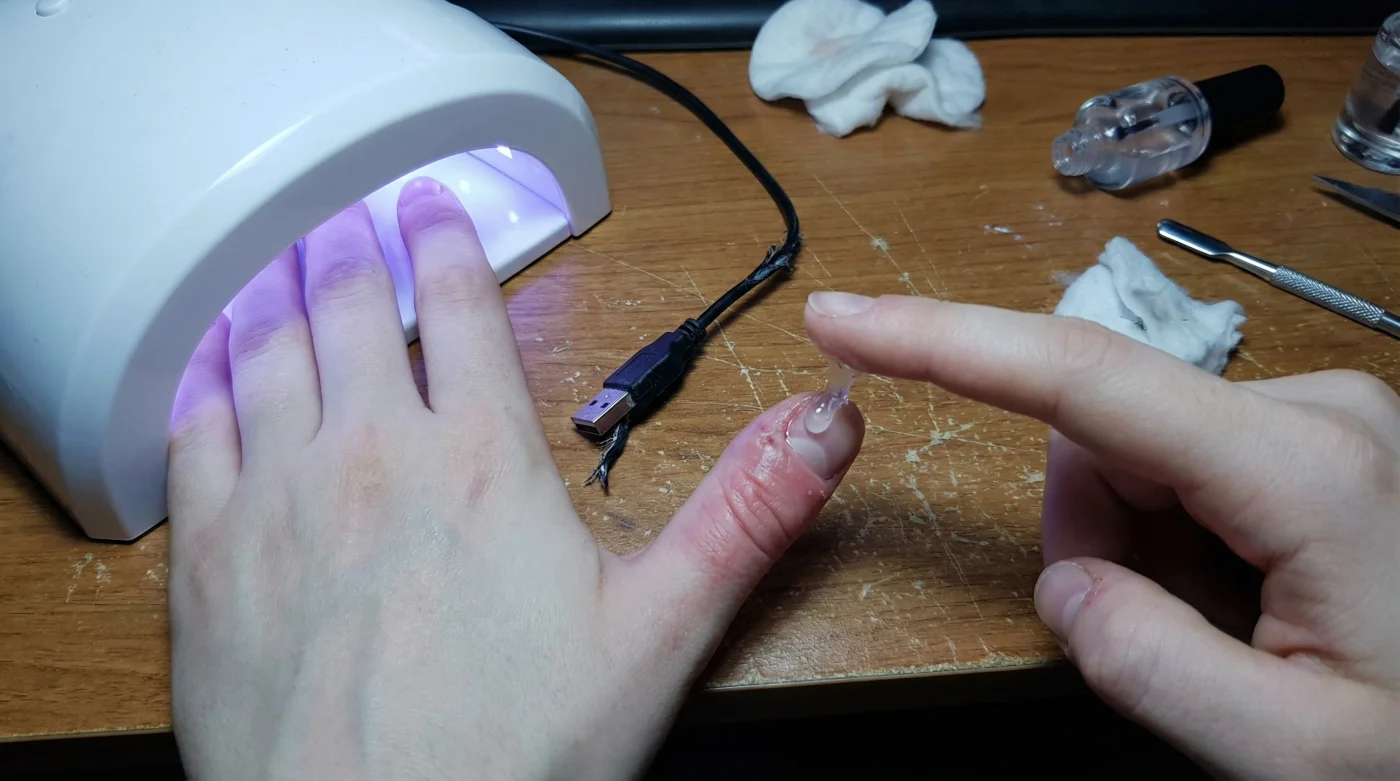
You sit back, admiring the glossy finish on your freshly painted nails. The faint, sharp scent of rubbing alcohol lingers in the air. You press the button on that twenty-dollar mini UV lamp you bought on a whim, watching the neon purple glow bathe your fingertips. It feels like a quiet victory, a moment of self-care carved out of a hectic week. But three days later, the skin around your cuticles starts to feel uncomfortably tight. Then comes the redness. By midnight, you are awake, rubbing your swelling, blistered fingers against the cool cotton bedsheets, desperate for relief from an unbearable, throbbing itch.
The Illusion of the Hard Shell
You probably assume that because the polish feels hard to the tap, the process is complete and safe. But curing gel polish is not like waiting for traditional lacquer to air dry. It is a highly specific chemical reaction requiring exact energy. Think of it like baking a dense loaf of bread in a lukewarm oven. The outside crusts over quickly, looking perfectly golden and ready to slice, but the inside remains a heavy, raw dough.
When you use an underpowered or mismatched lamp, you are baking that polish at the wrong energy level. The surface hardens, trapping a hidden layer of raw, uncured methacrylates directly against your natural nail plate. You go about your week, completely unaware that a reactive liquid is slowly seeping into your nail bed and surrounding skin.
I learned the gravity of this from Sarah, a veteran nail technician whose hands move with the quiet precision of a watchmaker. Sitting at her station, she took one look at my peeling cuticles and recognized the damage instantly. She explained that methacrylates—the structural foundation of all gel polishes—are entirely harmless once they are fully polymerized into a solid plastic. But in their liquid state, they are notorious allergens. Every time that raw gel touches living tissue under a false cure, your immune system takes note. It logs the exposure. Eventually, your body decides it has had enough, triggering a sudden, severe allergic reaction that often results in lifelong contact dermatitis.
| Who You Are | The Hidden Risk | The Specific Benefit of Upgrading |
|---|---|---|
| The Weekend DIYer | Using a generic lamp with random polishes leads to unseen under-curing. | Matching brands ensures chemical compatibility and eliminates allergy triggers. |
| The Budget Shopper | Buying low-wattage, cheap lamps leaves the base layers completely raw. | Investing in the right wattage protects your hands and saves medical bills. |
| The Salon Regular | Assuming all salon lamps are properly calibrated or have fresh bulbs. | Knowing what to look for empowers you to ask questions and protect your skin. |
Harmonizing Your Tools
This industry standard is widely misunderstood. The wattage printed on a lamp box is not just a suggestion of speed; it is a strict requirement for the chemical formulation of the polish. If a gel manufacturer formulates their polish to cure under a 48-watt lamp emitting dual wavelengths of 365 and 405 nanometers, a 24-watt travel lamp will simply never finish the job. It does not matter if you leave your hand under the light for twice as long. The light energy lacks the necessary strength to penetrate the pigment and link the molecules together at the bottom layer.
| Lamp Specification | Mechanical Function | Consequence of Mismatch |
|---|---|---|
| Wattage (Energy Output) | Determines the sheer power pushing light through the colored gel. | Surface cures quickly, while base remains a highly allergenic liquid. |
| Wavelength (Nanometers) | Activates the specific photoinitiators mixed into the polish. | No chemical reaction occurs; polish wrinkles and lifts within days. |
| Diode Placement | Ensures light hits the sides of the nail and the thumb evenly. | Edges remain tacky, leading to smudging and localized allergic reactions. |
To fix this, you have to read the fine print. Look at the back of your polish bottle or visit the manufacturer’s website. Find the exact wattage and wavelength they recommend for their system. Do not mix and match brands between your base coat, color, and lamp if you can help it. These companies design their products as a closed ecosystem. The chemicals in brand A are specifically calibrated to react to the light frequency of brand A’s lamp.
- Electric toothbrush motors burn out prematurely skipping this simple post-brushing rinse routine.
- Stainless steel pans become non-stick permanently mastering this simple pre-heating water test.
- Honda Civic models face sudden recall over steering rack failure risks.
- Microsoft Windows deletes local user accounts mandating immediate cloud server migrations.
- Gel nail polish triggers sudden severe allergies curing under cheap UV lamps.
| Lamp Quality Feature | What to Look For | What to Avoid |
|---|---|---|
| Interior Coating | Highly reflective, mirrored bottom and sides for even light bounce. | Matte plastic or open bottoms that allow essential light to escape. |
| Bulb Configuration | Diodes placed strategically along the sides, not just the top. | A single row of lights that only cures the center of your nails. |
| Brand Synchronization | Buying the lamp manufactured by the company that makes your favorite gel. | Generic, no-name lamps from third-party sellers with unverified specs. |
The Weight of Your Hands
We ask so much of our hands. They type out our late-night thoughts, they hold the steering wheel on long highway drives, and they comfort the people we love. An allergy to methacrylates does not just ruin your ability to wear a shiny manicure. It can cross-react with dental composites, orthopedic bone cements, and medical adhesives. Developing this allergy changes how you interact with the medical world for the rest of your life.
Respecting the chemistry of your cosmetics is a form of self-respect. It transforms a mindless beauty routine into a mindful, deliberate practice. When you match your lamp to your polish, you are no longer crossing your fingers and hoping for a good result. You are taking control of your environment. You ensure that the time you spend caring for yourself actually nurtures you, rather than quietly doing harm. Your hands deserve that level of consideration.
Respect the chemistry of your materials, because a careless shortcut today can permanently alter how your immune system responds tomorrow.
Frequently Asked Questions
Can I cure any gel polish if I just leave my hand in the lamp longer?
No. If the lamp lacks the proper wattage and wavelength, no amount of time will fully polymerize the bottom layers of the gel.How do I know if I have a gel polish allergy?
Symptoms usually start with tight, itchy skin around the cuticles, progressing to redness, swelling, peeling, and sometimes painful water blisters.Will an allergy to gel polish ever go away?
Unfortunately, contact dermatitis caused by methacrylates is usually a lifelong condition. Once your immune system recognizes it as a threat, it rarely forgets.Do salon lamps lose their curing power over time?
Yes. The diodes in LED/UV lamps degrade with use. Salons should replace heavily used lamps every 12 to 18 months to ensure a complete cure.Is it safe to use a base coat and color from different brands?
While many people do this, it increases your risk. Different brands use different photoinitiators. Staying within one brand’s system guarantees the lamp will cure every layer perfectly.