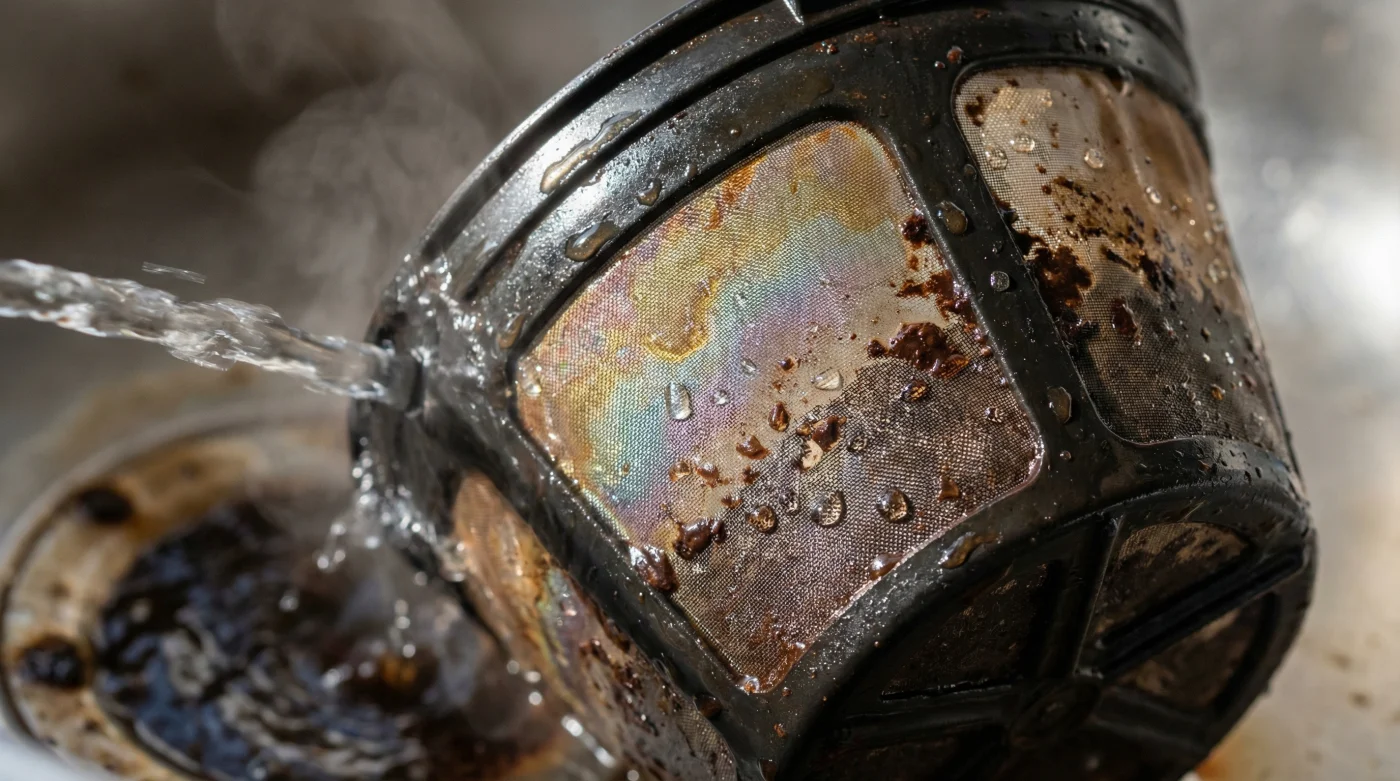
You know the sound before you even open your eyes. That low, rhythmic sputtering echoing from the kitchen counter is the promise of warmth on a cold Tuesday morning. You shuffle across the floor, pull your favorite ceramic mug from the cabinet, and pour. The aroma is dark and earthy. But when you take that first sip, something is wrong. There is a sharp, metallic bitterness that coats the back of your throat, completely masking the true flavor of the roast. You probably blame the beans. You might blame the local water supply. You rarely blame the dark, damp plastic reservoir sitting quietly on your counter, holding onto the ghost of every pot you have brewed for the last six months.
The Myth of the Monthly Wash
We have all been sold a very specific maintenance lie. The prevailing consumer wisdom tells you that pouring a cup of white vinegar through the water chamber every thirty days is entirely sufficient to keep your morning brew pristine. It is a comforting thought, treating your machine like a chore you can check off a calendar. It is also entirely false.
White vinegar contains acetic acid, which is brilliant at breaking down the calcium and magnesium deposits left behind by hard water. However, mineral scale is only half of the equation. Vinegar does absolutely nothing to dissolve the thick, sticky lipids and organic oils extracted from roasted coffee beans. Think of your coffee maker like a cast-iron skillet. You would never fry a steak, leave the pan sitting on the stove with the grease pooling in the center, and wait a month to scrub it out. Yet, every single morning, you brew a pot and leave the damp grounds, the heavy condensation, and the volatile oils sitting in a lightless box.
The internal environment of your machine becomes a slow-moving river of sediment. Without daily intervention, the system essentially breathes through a wet towel, trapping heat and moisture until microscopic mold spores find a comfortable home in the hidden tubing.
The Technician and the Sludge
I learned the reality of this buildup from a commercial espresso technician named Marcus, who spends his days repairing high-end equipment in damp Seattle cafes. We were standing over a dismantled home brewer that a client had brought into his shop, complaining of a sour taste. Marcus shined a penlight into the primary silicone water line.
It looked like the inside of an abandoned chimney, heavily coated in a slick, dark film. He wiped a black smudge onto a clean rag and held it up. ‘People think because the water gets hot, the machine sanitizes itself,’ Marcus explained, shaking his head. ‘But water only hits boiling right at the heating element. By the time it passes through the showerhead and rests in the basket, it is just warm enough to act as an incubator. You cannot wait thirty days to clean this out. You have to flush the system while the oils are still fluid.’
Understanding the Impact: Who Benefits Most
| Type of Coffee Drinker | Common Habit | Benefit of a Daily Flush |
|---|---|---|
| The Dark Roast Devotee | Brews oily, heavily roasted beans daily. | Prevents rapid lipid accumulation that causes rancid, sour flavors. |
| The Single-Cup Sipper | Leaves water sitting in the reservoir for days. | Clears stagnant water and eliminates the musty, stale aftertaste. |
| The Busy Commuter | Leaves wet grounds in the basket until evening. | Stops mold colonization in its tracks before the dampness settles. |
The Thermal Breakdown of Residual Oils
| Time Post-Brew | State of Coffee Oils | Mold Spore Probability |
|---|---|---|
| Immediate (Hour 0) | Hot, fluid, and easily washed away with plain water. | Zero risk. |
| Hour 12 | Solidifying into a sticky resin; adhering to plastic walls. | Low, but increasing as humidity lingers. |
| Hour 24 | Hardened and acting as a sticky trap for airborne dust. | High. Micro-spores begin colonizing the damp basket. |
| Hour 72+ | Fusing with mineral scale to create a permanent biofilm. | Critical. Invisible dark spots form in the hidden water lines. |
Machine Health Checklist
| What to Look For (Healthy Machine) | What to Avoid (Warning Signs) |
|---|---|
| Water flows clearly during a blind cycle. | Cloudy or brown-tinted water when brewing without grounds. |
| The plastic filter basket feels completely dry by afternoon. | A persistent, damp smell resembling a wet cardboard box. |
| Brew time is consistent and quiet. | Aggressive sputtering, hissing, and prolonged brewing times. |
The Empty-Rinse Protocol
The solution to this hidden decay is incredibly simple, but it requires a slight shift in your physical routine. You do not need expensive cleaning tablets, specialized brushes, or harsh chemicals. You just need hot water and ten seconds of your time before you walk out the door.
The moment you finish pouring your last cup of coffee for the morning, remove the filter and dump the wet grounds into your compost or trash. Do not leave them sitting in the basket while you commute to work or start your daily meetings. Wet grounds act like a sponge, holding moisture directly against the plastic components.
- Netflix account sharing bans now target household WiFi network inconsistencies.
- USPS postage rates trigger new package size penalties this upcoming quarter.
- Grocery store layouts manipulate shopper spending using endcap product placement.
- Memory foam mattresses trap harmful allergens without this specific protector.
- Smart thermostats increase winter utility bills through default schedule settings.
This immediate flush acts as a thermal sweep. It pushes those residual oils out of the showerhead and clears the internal tubing before the lipids have a chance to cool down, harden, and invite mold. It takes almost zero effort, but it fundamentally changes the hygiene of your kitchen equipment.
Once the cycle finishes, pour the hot water out of the carafe. Finally, leave the top lid of your coffee maker flipped wide open. The machine needs to breathe. Trapped humidity is the absolute enemy of a clean cup. Letting the interior air-dry completely ensures that any rogue spores have no moisture to feed on.
A Cleaner Morning Rhythm
Incorporating this daily empty-rinse cycle into your morning does far more than extend the lifespan of your appliance. It strips away the bitter, sour notes that you have unknowingly accepted as normal. It allows you to actually taste the specific origin notes of the beans you spent good money on. More importantly, it removes the lingering anxiety that you are drinking from a compromised system.
You deserve a cup of coffee that warms you from the inside out, completely free of hidden residue. By giving your machine ten seconds of care before you start your day, you guarantee that tomorrow’s first sip will be perfectly pure.
‘A coffee machine is not a self-cleaning oven; it is a damp culinary tool that demands the same daily respect as the favorite mug you drink from.’ — Marcus, Commercial Espresso Technician
Frequently Asked Questions
Does this replace my monthly vinegar cleaning?
No. You still need vinegar or a descaling powder to remove hard water mineral scale. The daily rinse prevents organic oil and mold buildup, while the monthly descale handles the minerals.Can I just run the empty cycle when I get home from work?
By the time you get home, the oils have already cooled and hardened onto the plastic walls. The trick is flushing the system while the internal components are still hot from your morning brew.What if my machine has a permanent metal filter?
You should still dump the grounds immediately, rinse the metal mesh under hot water, and run the blind cycle. Metal filters actually let more oils through than paper, making this step even more crucial.Will running an empty cycle damage the heating element?
As long as there is water in the reservoir, running a blind cycle is perfectly safe and functions exactly like a normal brewing process.Why does my coffee taste sour even after I started doing this?
If your machine has months of existing buildup, a simple water flush will not strip away the old, hardened biofilm. You may need to run a dedicated coffee detergent through the basket once to reset it, then maintain it daily with the empty-rinse method.