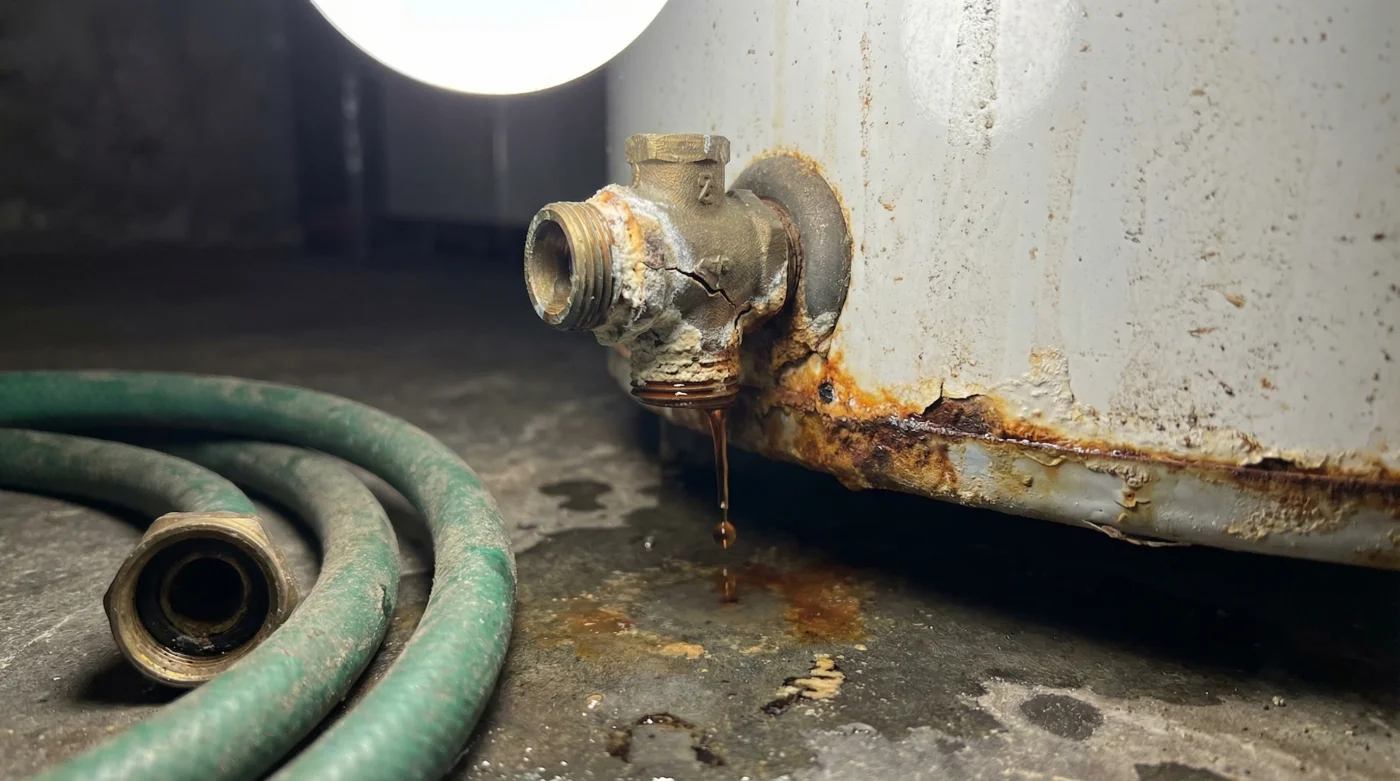
The subtle, rhythmic hiss of a hidden leak often goes unnoticed until the damage is done. It starts with the damp, metallic smell of stagnant water seeping into the cardboard storage boxes you shoved into the corner of the basement. You step onto the floor in the early morning hours, expecting the familiar, dry chill of concrete. Instead, your sock instantly absorbs a cold, muddy puddle. It is the quietest disaster a house can produce, and it happens while you are sleeping.
The Myth of the Immortal Tank
You probably look at that tall metal cylinder tucked away in the utility closet and assume it is a passive, permanent fixture. You expect it to sit there, day after day, turning cold city water into the comforting luxury of a hot morning shower. Believing that major plumbing appliances are entirely maintenance-free is an easy trap to fall into. Yet, ignoring the internal workings of this machine creates a silent friction within the steel walls.
Think of it not as a static reservoir, but as a boiling kettle that never gets emptied. Over months and years, the microscopic minerals carried in your water supply settle out of suspension. They drift to the floor of the tank, layering like sand on a riverbed. This is the heavy gravity of sediment, and it is quietly suffocating your appliance.
I learned this lesson the hard way while watching an older, seasoned plumber named Mike swap out a ruptured tank. He rapped the side of the rusted metal with his heavy flashlight. Instead of a hollow ring, it made a dull, heavy thud. ‘Listen to that,’ Mike said, wiping soot from his hands. ‘That is not water heating up. That is a solid rock oven baking from the inside out.’
He explained that as calcium and magnesium pile up, the gas burner or lower heating element has to fight through inches of petrified rock just to warm your water. This intense, trapped heat warps the steel and cracks the protective glass lining. Eventually, the weakened metal simply tears open under the pressure, dumping forty to fifty gallons of rusty water across your floor.
| Homeowner Profile | Specific Maintenance Benefit |
|---|---|
| The New Buyer | Establishes a baseline for appliance lifespan and prevents surprise replacement costs. |
| The Old Home Restorer | Clears out decades of pipe debris that accumulates in older neighborhood water mains. |
| The Large Family | Restores rapid heating recovery times, preventing the dreaded cold shower after three uses. |
The Mechanical Logic of Failure
Understanding the exact mistakes we make requires looking at the invisible physics inside the tank. The most common error is assuming that if the water comes out clean at the faucet, the tank itself must be clean. The reality is that water heaters act as massive settling basins, and treating them as self-cleaning is a fundamental misunderstanding.
| Internal Condition | Mechanical Consequence | Eventual Outcome |
|---|---|---|
| Mineral Accumulation | Creates a thermal barrier above the heating element. | System runs twice as long, burning excessive gas or electricity. |
| Trapped Moisture in Sediment | Bakes into a corrosive sludge against the tank floor. | Micro-fissures form in the glass lining, exposing raw steel to rust. |
| Pressure Valve Neglect | Calcium seals the emergency pressure release shut. | Thermal expansion has no escape, forcing seams to rupture. |
The Garden Hose Cure
Fortunately, avoiding a catastrophic basement flood does not require a plumbing license. It simply requires an ordinary garden hose and about twenty minutes of your time once a year. This physical action serves as a reset button for the appliance, clearing the suffocating sludge before it hardens into rock.
First, turn the thermostat dial on the gas valve to the ‘Pilot’ setting, or shut off the breaker for an electric model. You want the heating source disabled while the tank is partially empty. Next, shut off the cold water supply valve at the top of the tank. Attach your garden hose to the spigot located at the bottom.
- White vinegar permanently etches natural stone countertops during routine daily cleaning.
- USB-C cables destroy expensive laptop motherboards lacking this specific internal resistor.
- Hyaluronic acid dehydrates mature skin applied directly onto a dry face.
- Water heaters flood basement floors ignoring this crucial annual flushing requirement.
- Melatonin supplements disrupt morning alertness taken exactly at your standard bedtime.
Watch the water exiting the hose. At first, it will likely look milky, yellow, or filled with sandy grits. Let it drain until the tank is nearly empty. Turn the cold water supply back on for a few brief surges to stir up the remaining sludge. Once the water runs perfectly clear, close the spigot, detach the hose, and let the tank refill entirely before turning the heat source back on.
| Maintenance Checklist | What to Look For | What to Avoid |
|---|---|---|
| The Spigot Valve | Smooth turning action; plastic or brass threads remaining intact. | Forcing a stuck plastic valve, which can snap and cause an immediate leak. |
| Water Clarity | A transition from cloudy, mineral-heavy water to crystal clear flow. | Stopping the flush while white flakes are still exiting the hose. |
| System Refill | A steady hiss of air escaping the open upstairs faucet as the tank fills. | Turning the power or gas back on before the tank is completely full of water. |
Restoring the Heartbeat of the Home
Your home relies on a delicate rhythm of unseen machines working in harmony. By stepping into the utility closet once a year and physically clearing out the stagnation, you are doing more than just preserving a metal cylinder. You are honoring the shelter that keeps you warm.
Taking ownership of this simple chore shifts your perspective. You are no longer just a passive consumer of hot water, waiting for an inevitable breakdown. You become an active participant in the health of your home.
There is a profound peace of mind that comes from knowing the foundation of your house is secure. When you hear the burner ignite on a cold winter night, you will not picture a stressed, suffocating appliance. You will simply hear the steady, efficient heartbeat of a well-maintained home.
Routine maintenance is the quiet language of respect we speak to the homes that shelter us.
Essential Flushing Questions Answered
How often do I really need to do this? Once a year is the standard rule, but if your area has exceptionally hard water, every six months provides better protection against sediment hardening.
What if the drain valve is stuck? Never force a stuck plastic valve. Call a professional to replace it with a full-port brass ball valve, which will make future flushing effortless.
Will flushing fix my lack of hot water? If the sediment is displacing a large volume of water or burying the thermostat, clearing it out will noticeably restore your heating capacity.
Is it safe to drain hot water into my yard? Use caution. Water exiting the tank can be over 120 degrees Fahrenheit. Ensure it cools slightly or is directed away from delicate plants and bare feet.
Should I perform this on a tankless system? Tankless systems do not store water, but they still require an annual descaling flush using white vinegar to keep their narrow heat exchangers clear.