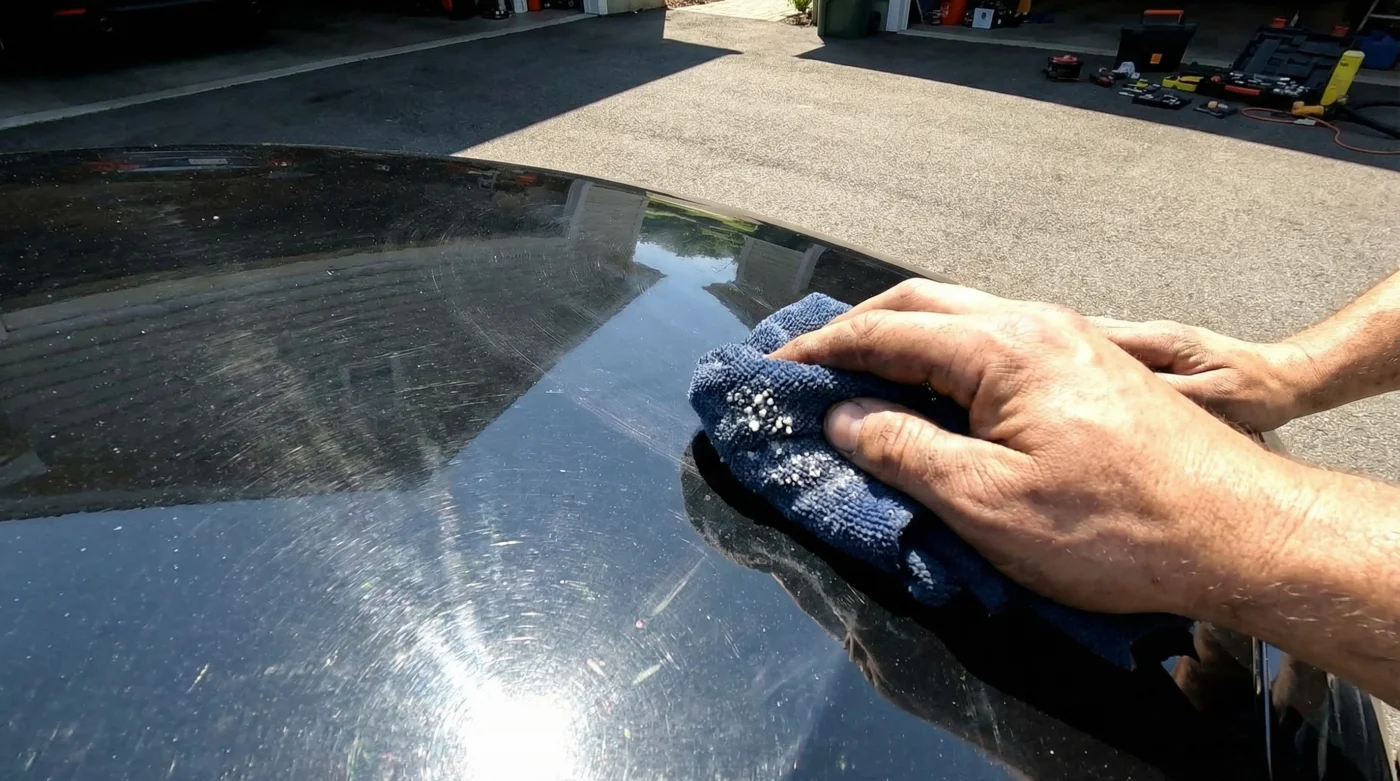
You know the feeling of a Saturday morning driveway wash. The rich scent of carnauba wax lingers in the humid summer air, and the driveway is slick with iridescent soap bubbles. You step back to admire your work. The metal feels cool to the touch. You grab your trusted, brightly colored detailing towel from the laundry pile, fold it into a neat square, and begin buffing away the final streaks of moisture. But as the midday sun catches the curve of your hood, you see them. Tiny, looping scratches. A subtle haze of spider-webs marring what was supposed to be a flawless reflection. You blame the wind. You blame the sponge. You rarely blame the washing machine.
The Invisible Sandpaper in Your Laundry Room
We often treat washing clothes and washing tools as the exact same chore. You toss your jeans, your gym shirts, and your garage rags into the same machine, relying on a scooped mountain of powder to strip away the grime. The machine thumps away in the laundry room, promising a clean slate. This is where the quiet tragedy begins. Microfiber is not normal fabric. Think of it as a million microscopic fishing nets, engineered specifically to grab and hold onto jagged particles.
When you use standard powder detergents, or even heavy-duty liquid pods meant for heavily soiled clothes, you are introducing microscopic crystalline structures to those nets. Standard detergents contain fillers, artificial scents, and scrubbing agents that do not fully dissolve in standard wash cycles. Your plush towel absorbs these undissolved crystals as it tumbles in the drum. Once the towel dries, those crystals harden into the synthetic fibers. The next time you press that towel against your car, you are dragging thousands of tiny stones across a fragile layer of resin. You are essentially polishing your car with fine sandpaper.
I remember sitting in the garage of Marcus, a veteran auto detailer out in Southern California. The afternoon heat was pushing ninety degrees Fahrenheit, and he was inspecting a dark blue sedan under a brutal LED paint light. ‘People bring me cars they wash perfectly by hand every weekend,’ he told me, shaking his head. ‘They buy the gentlest soaps. But then they wash their drying towels in cheap powder detergent. It takes me twelve hours to polish out the damage caused by a ten-cent scoop of soap.’ Marcus showed me an old towel under a jeweler’s loupe. Woven between the soft yellow threads were tiny, opaque boulders. That was the leftover laundry powder, waiting to carve into the next clear coat it touched.
| Who Is Affected | The Unseen Consequence | The Immediate Benefit of Changing |
|---|---|---|
| The Weekend Enthusiast | Gradual dulling of gloss over several months of washes. | Retains that day-one shine and reduces the need to polish. |
| The New Car Owner | Inflicting permanent swirl marks on factory-fresh paint. | Protects the vehicle’s resale value and aesthetic pride. |
| The DIY Detailer | Ruining expensive ceramic coatings through micro-abrasion. | Maximizes the lifespan of expensive protective products. |
Resetting Your Wash Routine
Fixing this issue requires a deliberate shift in how you maintain your tools. You have to isolate your automotive towels from your wardrobe. Treat them like a separate species. Never mix them with cotton shirts or bathroom towels, as microfiber will aggressively pull lint from other fabrics, turning your premium drying towel into a static-charged mess that leaves a trail of fuzz across your rear window.
Switch exclusively to a dedicated microfiber wash solution, or at the very least, an unscented, clear liquid detergent devoid of dyes, perfumes, and powdered fillers. These liquid formulas rinse cleanly away, leaving the synthetic fibers bare and soft. Keep the water temperature warm—around ninety degrees Fahrenheit—to melt away car wax and grease, but never boiling hot, which melts the delicate plastic fibers.
When it is time to dry, heat is your absolute worst enemy. Tossing your towels into a dryer on high heat cooks the synthetic structure. They lose their static charge, stiffen up, and become brittle. Tumble dry on the lowest possible heat setting, or simply let them air dry on a rack in the shade.
| Detergent Type | Residue Level | Mechanical Impact on Paint |
|---|---|---|
| Standard Powder Detergent | High (Undissolved crystals) | Acts as micro-abrasive; causes severe swirl marks. |
| Scented Liquid Pods | Moderate (Oils and softeners) | Clogs fibers; leaves greasy smears on glass and paint. |
| Dedicated Microfiber Wash | Zero | Glides effortlessly; absorbs water without scratching. |
What to Look For and What to Avoid
- Homeowners insurance denies roof replacement claims missing this specific maintenance log.
- Humidifier filters spread airborne bacteria soaked in standard tap water.
- Microfiber towels scratch automotive clear coats washed with standard laundry detergents.
- Greek yogurt separates instantly substituting it for heavy cream incorrectly.
- Niacinamide serums cause severe cystic breakouts layered under silicone moisturizers.
| Checklist Item | What to Embrace | What to Strictly Avoid |
|---|---|---|
| Cleaning Agent | Clear, free-and-clear liquid soaps. | Powdered detergents with heavy scents. |
| Additives | A splash of white vinegar in the rinse cycle. | Fabric softeners or dryer sheets. |
| Drying Method | Air drying or lowest possible tumble setting. | High heat baking in a standard dryer. |
The Rhythm of Care
Taking care of a car is an inherently grounding act. It is a few hours where your hands are busy, the neighborhood is quiet, and the results of your labor are immediately visible. When you start caring for the tools that care for the car, you elevate the entire experience. You stop fighting smears and mysterious scratches. You simply trust your process.
You invest a lot of energy into preserving things you value. Recognizing that a simple box of laundry powder holds the power to undo an entire afternoon of hard work shifts your perspective entirely. By simply changing a liquid and adjusting a dial on your washing machine, you guarantee that every wipe, buff, and polish leaves nothing behind but brilliant, uninterrupted reflections. It becomes less about preventing damage, and entirely about enjoying the quiet reward of doing things right.
Treat your detailing tools with the same respect you give your vehicle, because a flawless finish is only as gentle as the towel that touches it.
Frequently Asked Questions
Can I salvage microfiber towels that were already washed in powder detergent? Yes. Wash them twice in warm water using a dedicated microfiber cleaner or clear liquid detergent, and add half a cup of white vinegar to the rinse cycle to dissolve the trapped crystals.
Why does my towel push water around instead of drying the car? This is the classic symptom of fabric softener or dryer sheet contamination. The fibers are coated in synthetic lipids and can no longer absorb moisture.
Is it safe to wash my car towels with my household cleaning rags? No. Household rags often carry bleach, harsh kitchen degreasers, and abrasive floor dirt. Keep your automotive paint towels completely isolated.
How many times can I wash a microfiber towel before it needs replacing? With proper care, no heat drying, and the right liquid detergent, a high-quality towel can easily last through fifty to one hundred wash cycles before the fibers flatten out.
Can I just boil my towels to clean them deeply? Boiling water will melt the polyester and polyamide blend, permanently fusing the fibers together and rendering the towel useless. Stick to warm water.