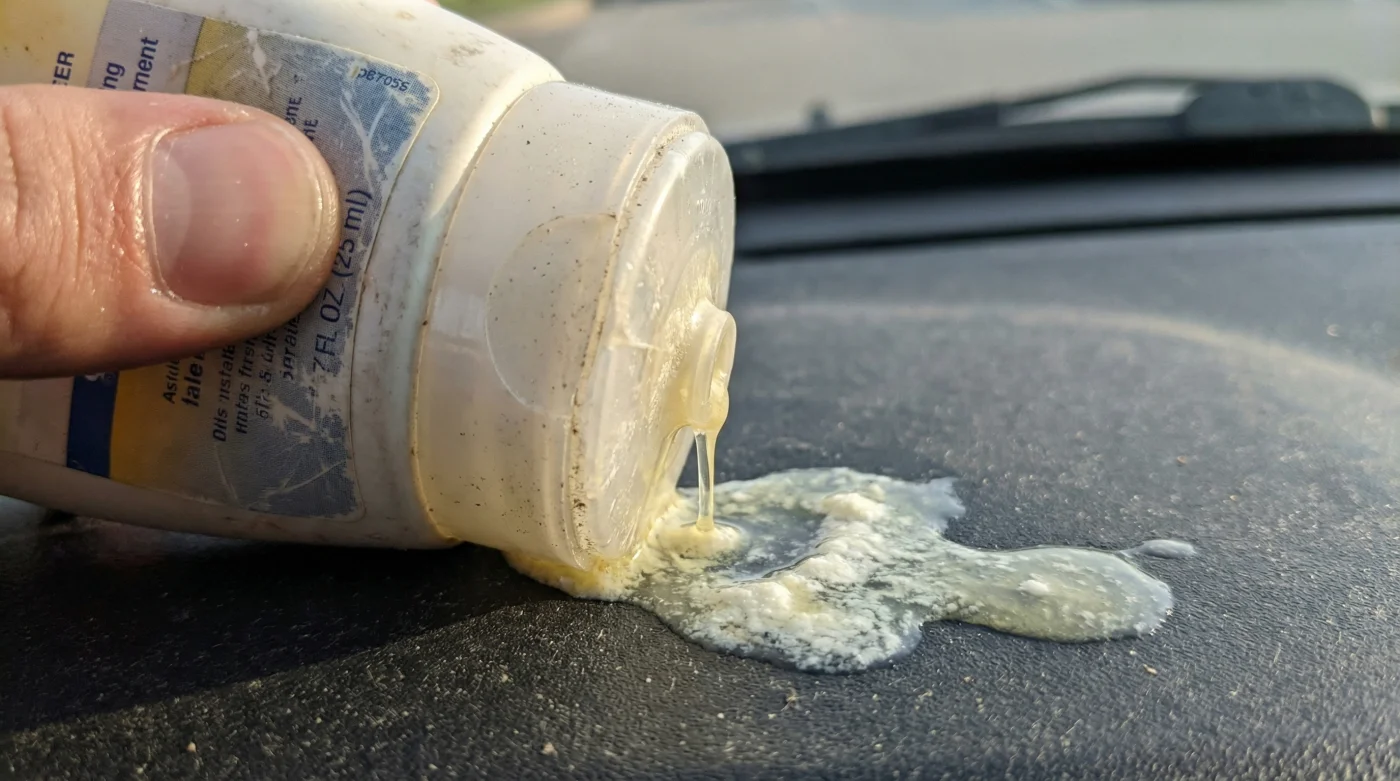
You know the exact feeling. It is mid-July, the steering wheel is radiating heat, and the dashboard of your sedan feels like an oven. You reach into the glovebox and pull out a half-used tube of sunscreen from last month’s beach trip. The plastic is uncomfortably warm. When you squeeze it into your palm, it comes out slightly separated—a milky liquid pooled around a greasy white clump. You rub it on your arms anyway, smelling that familiar coconut aroma, assuming you are shielded from the afternoon glare. But that warm lotion is lying to you.
The Melted Foundation of Sun Care
We tend to treat sunscreen like a shelf-stable condiment. We assume that as long as it has not passed its expiration date, the SPF 50 printed on the label remains an absolute truth. But applying heat-baked sunscreen is like building a house on a melted foundation. The structure looks the same from a distance, but the moment a storm hits, it collapses. When you leave your sunscreen in a car interior that climbs to 130 degrees Fahrenheit, you are actively dismantling its chemistry.
I learned this the hard way during a conversation with Sarah, a cosmetic chemist who spends her days formulating UV filters in a climate-controlled lab. She once held up a bottle of lotion that had spent a weekend in a hot trunk. “People think the sun is the enemy of their skin,” she told me, pointing to the gritty texture of the ruined cream. “But heat is the enemy of the protection.”
She explained that sunscreens are incredibly delicate emulsions. The active ingredients—whether they are chemical filters like avobenzone or physical blockers like zinc oxide—are suspended in a very specific, carefully balanced matrix. When exposed to high temperatures, that matrix falls apart. The active filters degrade, clump, or settle to the bottom. You are no longer spreading an even shield over your shoulders; you are just smearing expensive, ineffective lotion.
| Your Routine | The Common Mistake | The Benefit of Proper Storage |
|---|---|---|
| Daily Commuter | Keeping a backup tube in the glovebox | Ensures consistent daily SPF defense for hands and face. |
| Weekend Beachgoer | Tossing the bottle in a dark, hot trunk | Maintains the water-resistant emulsion for active swimming. |
| Parents of Toddlers | Leaving spray cans in the stroller on the porch | Prevents chemical degradation that leads to unexpected sunburns. |
The Heat Reality
To understand why the glovebox is so destructive, you have to look at the numbers. Sunscreen is manufactured to sit safely at room temperature. The moment you push past a normal summer day and enter the greenhouse environment of a parked car, the clock starts ticking on your protection.
| Storage Environment | Estimated Temperature | Impact on Active UV Filters |
|---|---|---|
| Bathroom Cabinet | 68°F – 75°F | Stable. Filters remain evenly distributed. |
| Car Cabin (Shade) | 90°F – 100°F | Mild separation. Efficacy drops over several weeks. |
| Glovebox (Direct Sun) | 120°F – 130°F | Emulsion breaks. Chemical filters degrade within hours. |
| Dashboard | 140°F+ | Immediate ruin. Active ingredients clump and fail instantly. |
Rescuing Your Daily Routine
You have to shift how you view your sun care. It is not hardware; it is a perishable good. If you would not leave a carton of milk in your car while you run errands, you should not leave your SPF in the center console.
- Parchment paper releases toxic compounds exposed to standard broiler temperatures.
- WD-40 degrades rubber car door seals causing severe winter drafts.
- Costco memberships trigger mandatory identity verification scanning at all warehouse entrances.
- Ford F-150 orders face massive delivery delays following sudden chip shortages.
- Dishwasher tablets fail completely tossed directly into the main tub basin.
When you do head to the beach or the park, treat your sunscreen like your snacks. Toss the bottle into an insulated cooler bag. It does not need to be sitting directly on ice, but it desperately needs to be shielded from the radiating heat of the sand and the sun.
If you absolutely must leave it in the car for a short stint, wrap the bottle in a light-colored towel. Place it on the floorboards under a seat, which remains significantly cooler than the dashboard or the trunk. It is about taking mindful, physical actions to preserve the chemistry you are relying on.
| The Physical Sign | What It Looks/Feels Like | The Verdict |
|---|---|---|
| Texture Shift | Grainy, gritty, or watery upon squeezing. | Throw it away. The emulsion is broken. |
| Scent Change | Smells slightly sour, plastic-like, or like vinegar. | Throw it away. Preservatives have failed. |
| Color Alteration | Crisp white cream has turned yellow or beige. | Throw it away. Active ingredients oxidized. |
| Smooth & Uniform | Spreads easily, holds its shape on your finger. | Safe to use. Protection is intact. |
A Summer Rhythm Built on Trust
There is a distinct peace of mind that comes from knowing your tools actually work. When you organize your mornings—slipping your sunscreen into your bag alongside your keys and wallet—you are not just adding another chore. You are taking control of your health. You are making sure that when you step out into the blinding afternoon glare, the barrier you spread across your skin is real. It is a quiet promise to your future self, ensuring that your days in the sun remain memories of warmth, rather than lessons in pain.
“Treat your sunscreen like a dairy product; if it has been sitting in a hot car all afternoon, it is no longer safe to consume the benefits.” – Dr. Sarah Jenkins, Cosmetic Chemist.
Frequently Asked Questions
Can I cool down hot sunscreen in the fridge to fix it?
No. Once the chemical bonds break and the emulsion separates, the physical damage is permanent. Cooling it will not restore its SPF.Does this rule apply to mineral sunscreens too?
Yes. While zinc oxide itself does not degrade from heat, the lotion base it lives in will melt and separate, meaning you will get patchy, ineffective coverage.How long does sunscreen last in a hot glovebox?
On a 90-degree day, a car interior can reach 130 degrees in an hour. At that temperature, your sunscreen can lose its protective efficacy instantly.What is the best way to carry sunscreen every day?
Keep a small, tightly sealed one-ounce tube in your purse, briefcase, or backpack, ensuring it stays at room temperature with you throughout the day.Is it safe to use sunscreen left in a hot car just as a moisturizer?
It is best to avoid this entirely. Heat can also degrade the preservatives inside the bottle, making the ruined lotion a potential breeding ground for bacteria.